Ancient vase obliterates the "copper tools" nonsense
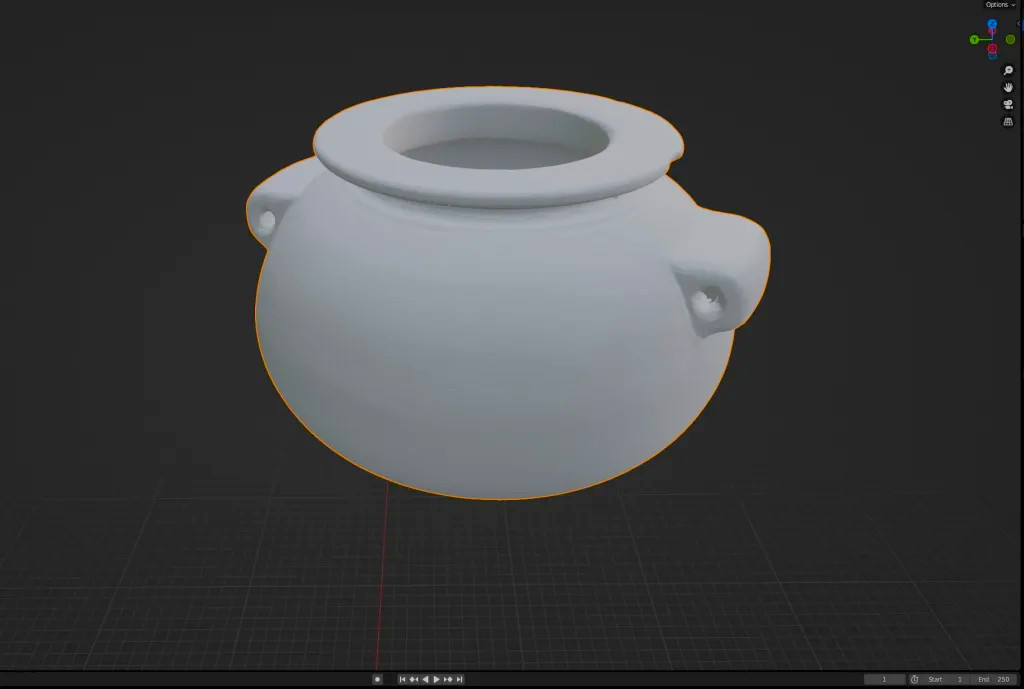
I've spent a fair amount of time over the years absorbing information about ancient artifacts and structures such as those found in Egypt on the Giza Plateau, the result of which is that the official narratives regarding the construction and manufacture of such megaliths and objects is baloney. These highly precise objects embedded with sacred geometry were clearly not made with primitive copper tools and grinding techniques as the mainstream historians posit, some of them having well defined tooling marks as would be created by a computer driven lathe or multi-axis milling machine.
Ben van Kerkwyk of UnchartedX has gathered a team including engineers, mathematicians and machinists to analyze a vase that is thought to be at least 5,000 years old and very possibly much older. The results of their work is absolutely stunning. The uncanny precision of the dimensions of this small, granite vase, both independently and in relationship to other features, are within a few thousandths of an inch and many dimensions are within one one thousandth of an inch. This degree of precision obviously eliminates the possibility of them be created using copper tools. Even more astounding is that there are 10's of thousands of these vases, yet they have apparently never been analyzed to this degree before. Part of the problem with accessing these objects seems to be that those holding them, such as the historical museums, often refuse to allow them to be studied.
If the incredible precision of these objects isn't enough to stun you and dispel the "hand carved" nonsense, there is another aspect of this particular vase that adds an additional layer of complexity to the mystery of their manufacture and that is the overall geometry which is shared among many ancient structures. Pi, phi and the Fibonacci sequence are embedded in many of these ancient objects, including this vase. If such artifacts were purely functional, there doesn't seem to be any logical reason to create them with such precision, so what other purpose might they have served? Apparently it isn't uncommon to find hundreds of these vases in a single cache with around 40,000 found in total, so were they perhaps used as currency or a status symbol?
While one may posit that this vase is a modern forgery, the precision is still there and it seems highly unlikely that such an artifact could be reproduced from any material, much less granite, using even the latest available technology. And even if one could replicate the exterior, that still leaves the removal of material from the interior while maintaining a ludicrous degree of precision of a few thousandths of an inch. The wall thickness of some of the granite vases is so thin that light passes through. Also there is the fact that many such artifacts and megaliths on the Giza Plateau are similarly precise. Were it not for the machine tooling marks present on other artifacts on the Giza Plateau, i might wonder if this vase was not made 'naturally', not that such objects grew on trees, but rather that someone knew how to manipulate the quantum field in order to materialize such an object without a machine.
Lastly, i wonder if this vase could have been perfect at one time. While there are currently errors of a few thousandths of an inch, how has time, temperature and humidity affected the granite?
- Video: Scanning a Predynastic Granite Vase to 1000th of an Inch - Changing the Game for Ancient Precision!
- Video: Ancient Egyptian Vase Scan Update! STL file, More Analysis - and Between the Lug Handles
- Video: Was a COMPUTER Used to Design this Artifact??
More recently another dozen or so vases were made available for analysis and, again, they all reveal a similar degree of precision. See the video and article, Ancient Precision: Confirmed! - UnchartedX.
The last few months has been a busy time for the vase scan team. Led by Chris Dunn, Alex Dunn and Nick Sierra, the team gathered in a precision lab in Danville IL to do a hands-on metrology inspection of several vases. Not only that, but many more of the remarkable ancient, hard stone vases that come from pre-dynastic and early dynastic ancient Egypt have been scanned via structured light and CT-Xray, and the results are frankly astonishing.
Not only has the incredible precision results of the original vase been confirmed in other artifacts, geometric and mathematical analysis has shown shared design principles between multiple vases - the same radial traversal function, the same fixed mathematical ratio between curvatures, and the same depth of elegance in the extensive use of pi and phi.
Video: Best Evidence for Ancient Machines in Egypt (7,000 Years Old) | Matt Beall - Danny Jones