Dealing With The Fuzz
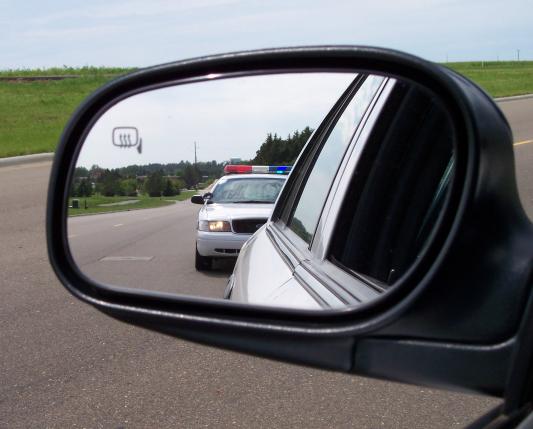
Table of Contents
Introduction
"The history of totalitarian regimes is reflected in the evolution and perfection of the instruments of terror and more especially the police." -- Carl J. Friedrich
There you are, happily driving along, when suddenly you notice that dreaded flashing light flickering in your rear-view. Perhaps you were speeding, or maybe you rolled through a stop sign. Whatever the case, one of the first questions you are likely to be asked is, "Do you know why i stopped you?". It's an all too familiar question when you are stopped for a traffic violation, but why exactly does the officer ask it?
This question is actually a tactic used by police to manipulate you into admitting your guilt. By admitting that, yes, maybe you were going a little too fast, you have incriminated yourself and your answer can then be used as evidence against you should you decide to later dispute the charge in court. Secondly, you are now virtually guaranteed of being cited or arrested for whatever wrongdoing you just admitted to.
Video: Steve Silverman - What To Do When Stopped By A Cop
Cops are sneaky. While you are legally obligated to not deceive the police, they are legally permitted to deceive you in order to obtain a confession or trip you up in some way. While it may seem more ethical to be honest and admit your wrongdoing, keep in mind that the police operate under a different set of rules. You don't have to lie, nor should you, but not answering their questions is not lying and is perfectly within your rights.
RULE #1: Never talk to the police (except when...)
"The biggest is, in any situation involving law enforcement, is to provide too much information." -- Nina Hodjat, Hodjat Law and DUI Partners (source: Know Your Rights: Police Checkpoints - YouTube)
While you may be legally obligated to disclose your identity in some cases, you are never obligated to answer any questions. Whether you are innocent or guilty does not matter; anything you say may be used against you and so the only thing you can possibly do, in most circumstances, is undermine your position by volunteering potentially incriminating information regardless of how certain you are that such information may benefit you.
If you're an honest, ethical person and you know you are guilty and you wish to accept responsibility for your actions, fine, you can always choose to do so after the initial encounter. There is no reason to give law enforcement any information that may add to your troubles.
Being stopped for a traffic violation may be somewhat different because the officer is in a position to let you go, however, while you should always be polite and show respect toward an armed police officer, you should be brief in your statements and never volunteer any information that may be used to incriminate you. Also see the document 'Traffic Stops' on the FreedomTaker website which you can print in order to have a copy to hand to police.
RULE #2: Remain calm
Always remain calm and courteous. Never raise your voice or invoke a confrontation, or make any quick moves or threatening gestures. You want to play a non-threatening role, but you want to do so without sacrificing your rights. The instant you lose your temper or threaten or intimidate the officer, you not only relinquish control, but you greatly increase the chance of an unfavorable outcome, especially when dealing with an aggressive cop. Keep in mind that people who choose to become cops often to so because they have an aggressive disposition and invite violent confrontation.
RULE #3: Know your rights
You are never obligated to consent to a search of your person or your property. In many states, but not all, you are not even required to produce identification unless you are suspected of committing a crime. You are not legally obligated to give the police permission to do anything, nor are you compelled to answer any of their questions, but you may ask questions that they may be obligated to answer. For example, if there is any doubt as to why you were pulled over during a traffic stop, simply ask the officer why you were stopped. A polite "Hello officer. Why did you stop me?" will do. If there is doubt as to whether you're being detained, ask the officer if you are being detained or are free to go. Unless you are being detained, you may end the encounter any time you choose, but you should always confirm whether you are free to go to prevent any possibility of a misunderstanding. Contrary to what may be popular belief, police officers are often ignorant of the law. If the officer is being aggressive or you know they are not following the law, you should exercise your option to have them call their supervisor. If the officer escalates the situation and asks you to step out of your vehicle, you must comply, but you are never obligated to sacrifice your rights.
The following text is from the NORML Foundation's Freedom Card and can be printed and handed to any police officer that questions or detains you:
I hereby invoke and refuse to waive all of the following rights and privileges afforded to me by the U.S. Constitution:
- I invoke and refuse to waive my Fifth Amendment right to remain silent. Do not ask me any questions.
- I invoke and refuse to waive my Sixth Amendment right to an attorney of my choice. Do not ask me any questions without my attorney present.
- I invoke and refuse to waive all privileges and rights pursuant to the case Miranda v. Arizona. Do not ask me any questions or make any comment to me about this decision.
- I invoke and refuse to waive my Fourth Amendment right to be free from unreasonable searches and seizures. I do not consent to any search or seizure of myself, my home, any vehicle, or of any property in my possession. Do not ask me about my ownership interest in any property. I do not consent to this contact with you. If I am not presently under arrest or under investigatory detention, please allow me to leave.
- Any statement I make, or alleged consent I give, in response to your questions is hereby made under protest and under duress and in submission to your claim of lawful authority to force me to provide you with information
RULE #4: Never resist
Never refuse to comply with an officers orders, regardless of whether those orders are illegal. The only questionable exception to this rule is when you are certain that the order is unlawful and you are reasonably certain your situation will be improved by disobeying the order, which is highly unlikely. In such a case you should carefully consider the consequences of your refusal before disobeying any order, but even for these very rare occasions it is highly questionable as to whether you -- usually the one without the gun -- should resist a trained and armed police officer, especially if they are being aggressive. While you are obviously not obligated to follow an illegal order, we can clearly see why we may choose to do so regardless and fight back later in court.
RULE #5: Record the encounter!
Like the child who doesn't steal a cookie when you're watching, law enforcement officers are more likely to observe the law if they know they are being recorded. Regardless of what the officer may tell you, you are legally permitted to record encounters with the police. For your own protection you should always record every encounter with the police and, though you should not make a big deal of it by positioning your camera right in the officers face, which may provoke an aggressive response, you should probably not make a secret of it either, although a second, hidden camera may be a worthwhile idea (check your local laws here). A record of the encounter may prove to be invaluable as evidence if you are forced to defend yourself in court or choose to initiate a legal action against the police. There are several apps for mobile devices that are designed specifically to record police encounters. If you are not able to record the encounter, ask a bystander to do so if any are near and be sure to get their contact information. You also have a right to request any video recorded by the police.
If an aggressive officer demands that you delete the recording or tries to take it from you, understand that your device may not be confiscated without a warrant, but also be aware that they may not know or care about the law, especially if tensions are high. If it seems likely the officer may use violence in order to confiscate your property if you refuse, it may be best to let them have it. In the event the officer deletes your recording, or forces you to do so under the threat of violence, don't sweat it. The files on your storage media should remain intact as long as they are only deleted and not later overwritten. In such a case, power off the device as soon as possible and when you get home use a utility such as PhotoRec to recover the "deleted" files.
Regardless of any threats the police may issue, you are legally allowed to share your recording publicly and this option is well worth considering when you know your rights were violated. Public pressure resulting from videos of aggressive police encounters have had a significant impact in many instances.
Lastly, if you disagree with my advice, then understand that it's not really my advice. Much of it comes from James Duane, a comical, fast-talking lawyer and his detective accomplice.
Video: Don't Talk to the Police
This is another very important video from the same lawyer...
Video: "You Have the Right to Remain Innocent" (James Duane)
Study resources
Read and understand the Rules of Engagement for Interacting with Police by the Rutherford Institute.
Video: "Failure to Obey" Documentary on Checkpoint Refusal
Required viewing:
- 7 Rules for Recording Police
- 10 Rules for Dealing with Cops, By a Cop - Alternet.org
- 10 Rules for Dealing with Police (Full-Length) - YouTube
- Know Your Rights: Police Checkpoints - YouTube
- Know Your Rights When Stopped By Police or Immigration Agents - ACLU of Washington
- LLO ACLU Criminal Stop Card.pdf
- Rules of Engagement for Interacting with Police
- Cop Stop Remain Silent 5-23-26
- Stopped by Police | American Civil Liberties Union
- The NORML Foundation Freedom Card - NORML
Video encounters with police:
- Attorney/Uber Driver Tutorial on Checkpoints
- Failure to Obey
- Homeland Security Checkpoint: Video Blog - Day 1 - YouTube
- How To Survive Police Interrogation, Cops At Your Door "I Don't Answer Questions" - YouTube
- Law Student -Schools- Policeman On His Gun Rights.mp4 - YouTube
- Police Stop: Travel without License, Registration, Insurance, or Plates! Right to Travel Success
General information:
- American Civil Liberties Union (ACLU)
- Auditing the Police - #SolutionsWatch | The Corbett Report
- CLDC Know Your Rights Activist Training - YouTube
- Drivers Beware: The Deadly Perils of Traffic Stops in the American Police State
- Essential Know Your Rights Course | Stop Illegal Searches, Detentions, and Intimidation
- Five Best Free Data Recovery Tools
- Flex Your Rights - Archive Site
- Flex Your Rights YouTube channel
- FredomTaker
- How To Stand Your Ground - #SolutionsWatch | The Corbett Report
- Pay no Fine: A User Guide to Successfully Fighting Traffic Tickets
- Reporter's Recording Guide | The Reporters Committee
- The Constitution-Free Zone: Fact and Fiction