UNRWA report: Detention and alleged ill-treatment of detainees from Gaza during Israel-Hamas War
Detention and alleged ill-treatment of detainees from Gaza during Israel-Hamas War (PDF)
The tortures described in the document are only an infinitesimal sample of what the Israeli Zionist beasts are capable of. The torture gets much worse than what is described here. Following is the complete text from the document.
This report is based on information obtained as a result of UNRWA's role coordinating humanitarian aid at the Karem Abu Salem (Kerem Shalom) crossing point between Gaza and Israel, where the Israel Defence Forces have been regularly releasing detainees since early November 2023, and from information provided to UNRWA independently and voluntarily by Palestinians released from detention, including men, women, children and staff members. This report does not provide a comprehensive account of all of the issues regarding individuals detained during the Israel-Hamas war, and notably does not cover any issues concerning the hostages taken by Hamas on 7 October or other concerns regarding the treatment of any detainees in Gaza by Palestinian armed actors.
Shortly after Israel Defence Forces (IDF) launched ground operations in the Gaza Strip towards the end of October 2023, reports of Palestinians being detained in northern Gaza began to emerge. UNRWA began recording the detention of men and women sheltering inside the Agency's facilities by the IDF starting 12 November 2023.1 On 16 December, the UN Office of the High Commissioner for Human Rights reported receiving "numerous reports of mass detentions, ill-treatment and enforced disappearance of possibly thousands of Palestinian men and boys, and a number of women and girls, at the hands of the Israeli Defence Forces." 2
In addition to northern Gaza, detentions have since been reported in the Middle Area of Gaza from December 2023 and in Khan Younis from January 2024. Gazans have reportedly been detained while fleeing to the south, while in their homes during IDF operations, from their places of work including hospitals, 3 and while sheltering in UNRWA installations and other facilities.
As of 4 April 2024, UNRWA has documented the release of 1,506 detainees from Gaza by the Israeli authorities through the Karem Abu Salem (Kerem Shalom) crossing point with Israel. This included 43 children (39 boys, four girls) and 84 women. Among those released were 16 family members of UNRWA staff and 326 Gazan labourers working in Israel. The Agency has also documented the release of 23 UNRWA staff detained by Israeli authorities.
Held incommunicado in unknown locations
Detainees described being transported by trucks to what appeared to be large makeshift "military barracks" housing between 100-120 people, where they were held incommunicado in between periods of interrogation, sometimes for several weeks. Several detainees reported that they were held at the military barracks located at Zikim (just north of Erez in southern Israel), where there is an Israeli military base. Detainees reported also being held at sites around Beer Sheva, identifying Sde Teiman base.4 Detainees reported being sent multiple times for interrogations, with a final interview with Shabak (the Israeli domestic intelligence branch). Prior to their release, detainees were generally transferred to the Israeli Prison System, with Naqab prison in the Negev desert frequently cited. Women reported being taken to Anatot military camp in East Jerusalem and Damon prison in Haifa (northern Israel). Ashkelon detention centre (south), Ofer prison (in the occupied West Bank), Al-Jalame prison in northern Israel and detention in Jerusalem were also reported.
Reports of ill-treatment in detention
Detainees reported ill-treatment during the different stages of their detention. Released detainees included men and women, children, older persons, persons with disabilities, and the injured and sick, all of whom were subjected to similar forms of ill-treatment according to first hand testimonies received by UNRWA. Agency staff at Karem Abu Salem witnessed signs of trauma and ill-treatment among the released detainees. In almost all instances, Palestinian Red Crescent ambulances transported some persons from the crossing to local hospitals due to injury or illness.
"I saw people [in detention] 70 years old, very old. There were people with Alzheimer's, old people who were blind, people with disabilities who couldn't walk, people who had shrapnel in their backs and couldn't stand up, people with epilepsy... and torture was for everyone. Even for people who didn't know their own names. We told them that someone was blind. They didn't care."
Adult male detainee aged 46 years.
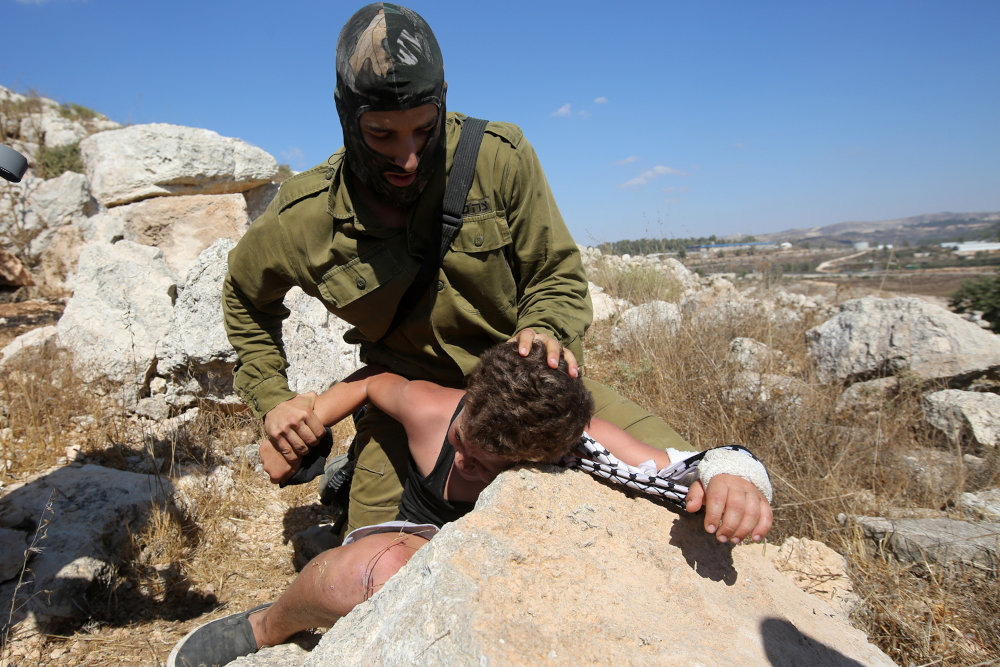
Detainees described having all items in their possession confiscated - including identification documents and money - at the time of their detention and generally not returned after their release. Ill-treatment was reported to have occurred primarily while in the barracks, and to have intensified in advance of interrogation sessions. This included being subjected to beatings while made to lie on a thin mattress on top of rubble for hours without food, water or access to a toilet, with their legs and hands bound with plastic ties. Several detainees reported being forced into cages and attacked by dogs. Some released detainees, including a child, had dog bite wounds on their body. Detainees were threatened with prolonged detention, injury or the killing of family members if they did not provide requested information.
"[Shabak] showed me my whole neighbourhood on a computer screen and asked me to tell them about all of the persons they pointed to - who is this, who is this, etc. If I didn't recognize someone, the soldier threatened to bomb my home. She asked me who in my home did not evacuate to the south. I told her my brothers and my father stayed at home. She said if you don't confess with all information, we will bomb your home and kill your family."
Adult female detainee, 34 years.
Detainees also described being made to sit on their knees for 12-16 hours a day while in the barracks, blindfolded, with their hands tied. Sleep was permitted between midnight and 4-5 AM, with the lights constantly on and fans blowing cold air despite the cold weather. Several detainees reported having wet blankets thrown on them. Other methods of ill-treatment reported by detainees included physical beatings, threats of physical harm, insults and humiliation such as being made to act like animals or getting urinated on, use of loud music and noise, deprivation of water, food, sleep and toilets, denial of the right to pray and prolonged use of tightly locked handcuffs causing open wounds and friction injuries. The beatings included blunt force trauma to the head, shoulders, kidneys, neck, back and legs with metal bars and the butts of guns and boots, in some cases resulting in broken ribs, separated shoulders and lasting injuries.
"They were beating me with an extendable metal bar. There was blood on my trousers and when they saw it, they beat me there. They used a nail gun on my knee. These nails were kept in my knee for about 24 hours until I was transported to Naqab prison."
Adult male detainee, aged 26 years.
Reports of sexual violence and harassment
In most reported detention incidents, the IDF forced males, including children, to strip down to their underwear. UNRWA also documented at least one occasion where males sheltering in an UNRWA installation were forced to strip naked and were detained while naked.
Both men and women reported threats and incidents that may amount to sexual violence and harassment by the IDF while in detention. Male victims reported beatings to their genitals, while one detainee reported being made to sit on an electrical probe.
"They made me sit on something like a hot metal stick and it felt like fire - I have burns [in the anus]. The soldiers hit me with their shoes on my chest and used something like a metal stick that had a small nail on the side...They asked us to drink from the toilet and made the dogs attack us...There were people who were detained and killed - maybe nine of them. One of them died after they put the electric stick up his [anus]. He got so sick; we saw worms coming out of his body and then he died."
Adult male detainee, aged 41 years.
Women described being exposed to psychological abuse, including insults and threats, as well as inappropriate touching during searches and as a form of intimidation and harassment while blindfolded. Both men and women reported being made to strip naked in front of male soldiers during searches and being photographed and filmed while naked.
"They asked the soldiers to spit on me, saying 'she is a b****, she is from Gaza.' They were beating us as we moved and saying they would put pepper on our sensitive parts [genitals]. They pulled us, beat us, they took us in the bus to the Damon prison after five days. A male soldier took off our hijabs and they pinched us and touched our bodies, including our breasts. We were blindfolded and we were feeling them touching us, pushing our heads to the bus. We started to squeeze together to try to protect ourselves from the touching. They said 'b****, b****.' They told the soldiers to take off their shoes and slap our faces with them."
Adult female detainee, 34 years.
Detention of UNRWA staff and reports of forced confessions
UNRWA recorded cases of Palestinian UNRWA staff in Gaza detained by the IDF - including some detained during the performance of their official duties for the UN, including while working at UNRWA installations and in one case during a coordinated humanitarian movement. UNRWA staff were reportedly held incommunicado and subjected to the same conditions and ill- treatment as other detainees, both in Gaza and in Israel.
UNRWA staff members reported being interrogated about the work performed by UNRWA, and the specific functions they perform on behalf of UNRWA. They also reported being subjected to threats and coercion while in detention and being pressured during interrogations to make forced confessions against the Agency, including that the Agency has affiliations with Hamas and that UNRWA staff took part in the 7 October attacks against Israel.
The ill-treatment and abuse against UNRWA staff members as relayed by staff members themselves included severe physical beatings and treatment akin to waterboarding, resulting in extreme physical suffering; beatings by doctors when referred for medical assistance; exposure to and being attacked by dogs; threats of rape and electrocution; threats of violence with guns pointed at them; verbal and psychological abuse; threats of murder, injury or harm to family members; humiliating and degrading treatment; being forced to strip naked and being photographed while they are undressed; and being forced to hold stress positions. UNRWA has made official protests to the Israeli authorities about the reported treatment of Agency staff members while they were in Israeli detention centers. UNRWA has not received any response to these protests to date.