Special update on Iran's use of cluster munitions in 2026 war
I posted the latest video from the Frum Report regarding Iran's use of cluster munitions in my latest post on the Iran War, Iran war news - 20-Mar-2026, and then removed it until i had a chance to review whether what was being said was accurate. Following is their report. Note that the video is AI generated. I do not know how the script is generated.
CLUSTER BOMBS OVER TEL AVIV - IRAN'S DEADLIEST ATTACK AND ITS HIDDEN AFTERMATH - YouTube
The strikes on Israeli population centers in recent hours did not simply detonate on impact. That is the dimension of what happened that most coverage is not communicating clearly - and it is the dimension that will define the consequences not just in the hours after impact but for months and potentially years afterward.
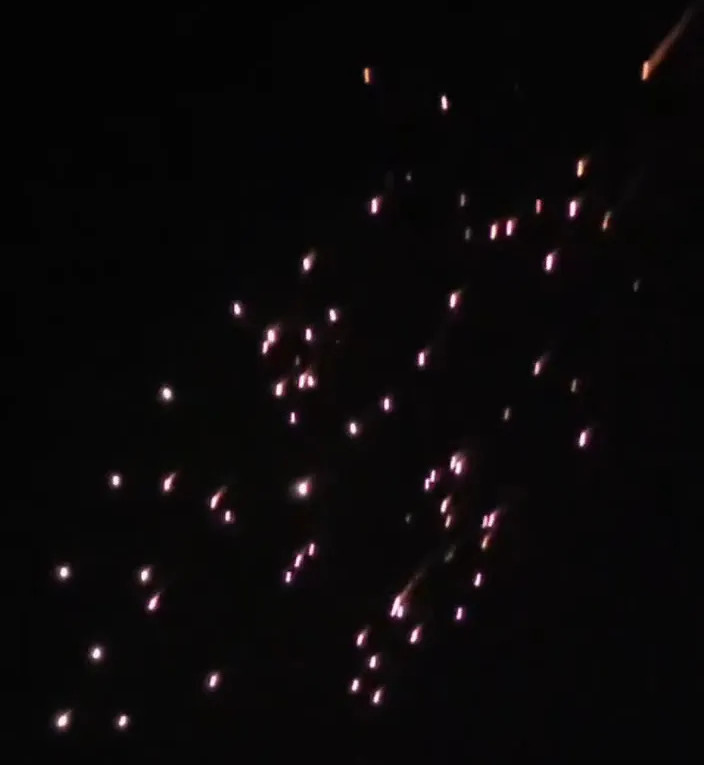
Cluster munition warheads release dozens of independent submunitions at altitude. Some detonate immediately. Some do not. The ones that do not become live explosive devices distributed across rooftops, courtyards, streets, and soil in Ramat Gan, Bnei Brak, Lod, and Petah Tikva - among the most densely populated neighborhoods in Israel. When the population emerges from bomb shelters, when children return to streets, when emergency workers move through debris, the danger will not be ending. It will be entering a different, slower, more indiscriminate phase.
Iran's use of cluster munitions against Israeli civilian areas is wrong and should be condemned without qualification. At FRUM REPORT we do condemn it - and we also examine the full documented record that the selective international condemnation is not examining, because international humanitarian law either applies universally or it applies politically, and those are two fundamentally different things being described by the same vocabulary.
What do we know about Iranian cluster warhead missiles:
Seven waves of Iranian missile attacks targeted Israel from the morning to the afternoon March 15, with Hebrew media reporting casualties and damage.
Many of the missiles launched by the Islamic Republic were armed with cluster warheads, and the Islamic Revolutionary Guard Corps even announced that it had used a Sejjil solid-fueled, multi-staged, medium range ballistic missile on one of the attacks.
Very little is known about the Sejjil, but the missile is reported to have a range from 2,000 to 2,500 kilometers, with a warhead weighing between 500 and 1,500 kilograms.
The missiles set off warning sirens across central Israel, and while the Israeli Defense Forces (IDF) announced successful interceptions, multiple impacts were recorded, with Hebrew media reporting, citing the Magen David Adom ambulance service, that at least seven people were wounded.
Cluster Warheads Designed to Overwhelm Layered Air Defence
Iran's use of cluster-configured ballistic missile warheads reflects a deliberate attempt to exploit known limitations in interception systems that are optimised for single re-entry vehicles rather than dozens of dispersed sub-munitions released at high altitude.
The Khorramshahr-4 and Qadr missiles used in the attack carried warheads capable of dispensing multiple bomblets, each weighing roughly 2-2.5 kg of explosive, released mid-flight to create a wide fragmentation footprint covering several kilometres.
Once deployed at altitude, the sub-munitions spread over an estimated radius of up to eight kilometres, forcing Israeli interceptors to engage the carrier missile before separation or accept multiple ground-level impact risks after dispersion.
Israeli officials indicated that roughly half of the ballistic missiles in recent barrages have carried cluster payloads, marking a significant increase compared with earlier phases of the conflict in 2025 when most missiles used conventional single-warhead configurations.
This change in payload composition suggests a shift toward attritional bombardment aimed at exhausting interceptor inventories, increasing civil-defence strain, and forcing broader geographic alert coverage across Israel's central region.
Video evidence and verified reporting confirmed mid-air sub-munition release during the March 17-18 strike, with multiple fragmentation impacts recorded across urban and suburban locations rather than a single concentrated strike point.
What is known:
- Iran is using missiles with 'cluster warheads'
- Iran, Israel and 14 other countries are not signators to the Oslo Convention on Cluster Munitions which forbids their use
- Israel uses cluster munitions on civilians, including white phosphorous, flechette shells and other horrific weapons
- Iran consistently claims to not target civilians
Frum Report claims:
- Iran is deliberately targeting civilians with cluster munitions
- not all of the munitions will detonate, thus creating a future explosion hazard, something that could occur long after the war ends and reconstruction begins
Accuracy of the Frum Report claims regarding deliberate targeting of civilians:
The key question is whether Iran is purposely targeting civilians using cluster munitions. If they are being used on military infrastructure or facilities that contribute to Israel's war on Iran, i personally have no problem with that whatsoever, but if civilians are being targeted, that would be a clear war crime in which case Iran is lying about not targeting civilians.
The report from South Front states that Israel claimed that at least 7 people were injured. One would obviously expect a higher number of injuries if a cluster munition was used in a densely populated civilian area given that the individual warheads apparently cover roughly a 6 km area and, in fact, it is quite possible that more people were injured or killed given that Israel is greatly down-playing the damage it is incurring.
There seems to be some visual evidence that cluster munitions may have been used in civilian areas in Israel. For example in the following video a small explosion is seen in a street, however i'm not seeing any other nearby explosions, so i'm not sure if the explosion is the result of a cluster warhead.
Regarding the claim by the Frum Report that some of the cluster warheads will fail to detonate, thus creating a future hazard, i find this to be a bit dubious. I think such a claim is unfounded at this time given that not everything is known about this particular warhead, though there is a photo in the Defence Security Asia article of what is claimed to be an unexploded bomblet from a cluster warhead.
At this point it seems Iran may be targeting densely populated areas of Israel with cluster munitions which would constitute a war crime. I remain skeptical however given that, of the 3 primary participants in this war, Iran has acted far more ethically. Lastly, Iran is using the unquestionably deliberate targeting of its civilians by Israel and the US to its advantage, a political and sentimental advantage that would be largely nullified if they did the same. Although Israel is heavily censoring news of its destruction, it's difficult to imagine that they would suppress mass civilian casualties as a result of a cluster munition.