The bigger picture: It's not about Iran.
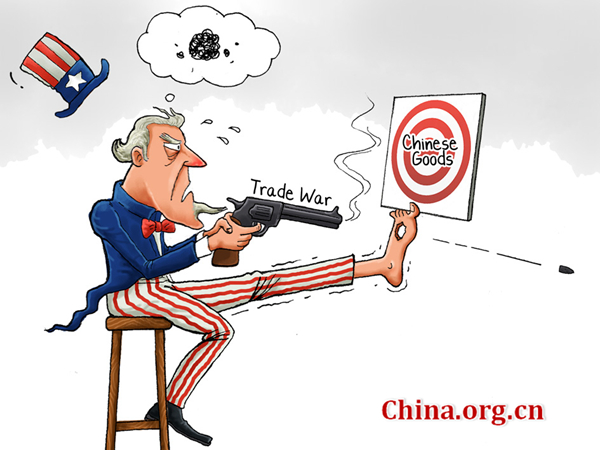
The illegal US-Israel war of aggression on Iran has nothing whatsoever to do with the fallacy of Iran pursuing a nuclear weapons program. If this were the true, Trump would not have tore up the Joint Comprehensive Plan of Action (JCPOA) which, by the way, was done without bothering to provide any logical explanation. The agreement established strict limits on what Iran could do regarding its nuclear enrichment program which it always intended to be used for peaceful purposes including healthcare and energy. It is exceedingly clear that Iran did not seek nuclear weapons for ethical and religious reasons and the US intelligence community is perfectly aware of this, as are the Israeli's, yet Netanyahu and Trump, along with their obedient minions in the press, have chosen to ignore the assessments of their own intelligence assets and instead push the false narrative that Iran was days/weeks/months away from developing 'the bomb' which Netanyahu has done for the past 30 years.
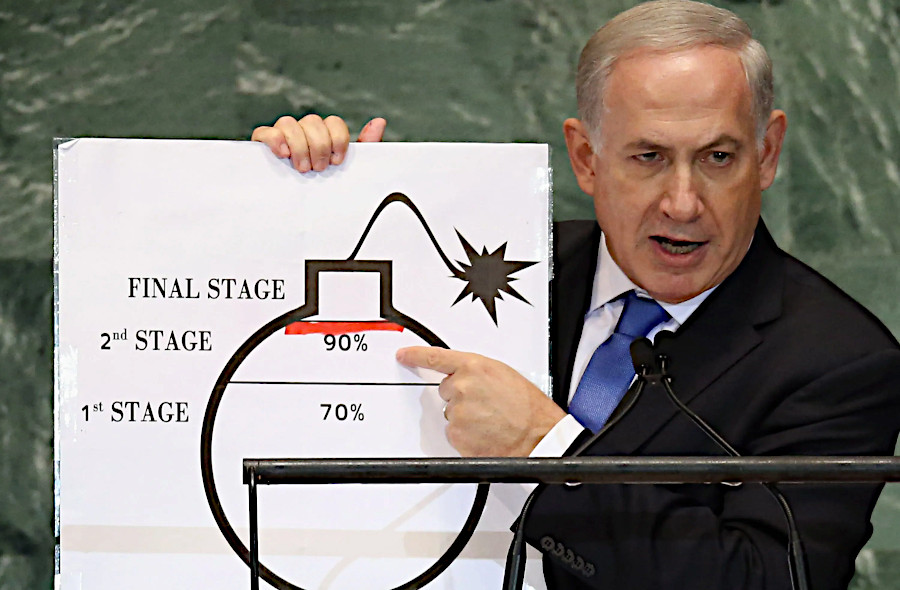
Iran and Nuclear Weapons Production | Congress.gov | Library of Congress (9-Apr-2026)
According to official U.S. assessments, Iran halted its nuclear weapons program in late 2003 and has not resumed it. This program's goal, according to U.S. officials and the IAEA, was to develop an implosion-style nuclear weapon for Iran's Shahab-3 ballistic missile. Tehran has not made a decision to develop nuclear weapons, according to 2024 and 2025 public U.S. intelligence assessments. The 2025 U.S. Intelligence Community Annual Threat Assessment published by the Office of the Director of National Intelligence (ODNI) identifies Iran's Supreme Leader Ali Khamenei as the "final decisionmaker" over "any decision to develop nuclear weapons."
So what does the US do? It assassinates the "final decisionmaker" who was steadfastly opposed to developing nuclear weapons. This, in and of itself, is concrete evidence that the US-Israel claims that Iran needs to be destroyed because of its intention to build 'the bomb' are a hollow fabrication. Nevertheless, the US and Israel continue to drag out this war of global consequence without having fully realized any of their stated or implied objectives, nor any viable prospect of achieving them in the future. Furthermore, the US is losing all credibility in the eyes of the world and destroying its relationships with its allies, particularly in the Gulf region, so why then does the war continue? Following are some of the failures of the US-Israel war on Iran:
- Strait of Hormuz open: FAIL (Iran, not the US, briefly opened the strait, then closed it again on 18-Apr. due to US violations of the ceasefire)
- US blockade of Strait of Hormuz: LIMITED SUCCESS (US Navy cannot approach Iran's coast without being attacked nor patrol the immense area of the regional waters in order to intercept cargo ships - meanwhile, new routes of trade are being established that bypass the US blockade)
- elimination of nuclear enrichment program: FAIL
- elimination of nuclear weapon program: INAPPLICABLE (Iran is not seeking nuclear weapons, or at least they weren't prior to the US-Israel attack on 28-Feb-2026)
- highly enriched uranium seized/transferred: FAIL
- ballistic missile program eliminated: FAIL
- navy eliminated: PARTIAL SUCCESS (best yet to come if US continues to FAFO)
- air force eliminated: PARTIAL SUCCESS (destruction largely irrelevant)
- regime change: PARTIAL SUCCESS, if you want to call it that (the new ayatollah is less US-friendly than his father was)
- US involved in selection of new ayatollah: FAIL
- US regional bases fully operational: FAIL
- US presence in Gulf states: COMPROMISED
- threat to Israel eliminated: FAIL
What the US has achieved, albeit to a limited degree, is curbing oil and other commodity exports to China and restricting the petroleum output of Russia and herein lies the bigger picture.
Lost Decade | Council on Foreign Relations
Lost Decade is an essential guide for understanding the historic shift to Asia-centric geopolitics and its implications for the United States' present and future.
Across the political spectrum, there is wide agreement that Asia should stand at the center of U.S. foreign policy. But this worldview, first represented in the Barack Obama administration's 2011 "Pivot to Asia," marks a dramatic departure from the entire history of American grand strategy. More than a decade on, we now have the perspective to evaluate it in depth. In Lost Decade, Robert D. Blackwill and Richard Fontaine-two eminent figures in American foreign policy-take this long view. They conclude that while the Pivot's strategic logic is strong, there are few successes to speak of, and that we need a far more coherent approach to the Indo-Pacific region. They examine the Pivot through various lenses: situating it historically in the context of U.S. global foreign policy, revealing the inside story of how it came about, assessing the effort thus far, identifying the ramifications in other regions (namely Europe and the Middle East), and proposing a path forward.
The authors stress that the United States has far less margin for foreign policy error today than a decade ago. As the international order becomes more unstable, Blackwill and Fontaine argue that it is imperative that policymakers fully understand what the Pivot to Asia aimed to achieve-and where it fell short-in order to muster the resources, alliances, and resolve to preserve an open order in Asia and the world. Crafting an effective policy for the region, they contend, is crucial for preserving American security, prosperity, and democratic values.
Anyone that's been around for a while knows that the neoconservatives have had it in for Russia and China for many decades. As i recall, the US neocons wanted to start a war with the two countries directly, while Zbigniew Brzezinski felt that the US could not win such a war, suggesting instead the more sane alternative of pitting the two countries against each other after which the US would swoop in and clean up the scraps, thereby expanding its empire. Not many people can see how Iran apparently plays into this, but indeed it does.
Given the cooperation we see today between Russia and China, Brzezinski's plan seems to have been shelved, yet the US is in no shape to challenge either country militarily. It failed to subdue Yemen's Houthi's in 2025 and it will surely fail to destroy Iran and both Russia and China are far more formidable opponents. Nevertheless, the United States chose to initiate a war with Iran, but it has also initiated military operations in several other countries recently, including Russia (by proxy), Somalia, Iraq, Yemen, Venezuela, Nigeria and Ecuador.
Brian Berletic, a former US Marine and geopolitical analyst of The New Atlas, presents a case that the US war with Iran is little more than a bullet-point in a greater plan to strangle China economically by destroying the global economy through the constriction of oil and other commodities. BRICS, and specifically Russia and China, are the targets in the goal to preserve US economic dominance. Much of Venezuela's oil, a portion of which is now going to Israel, was being sold to China which also purchases a lot of oil from Russia, Saudi Arabia, Malaysia, Iraq, Oman and Iran. Of these, energy infrastructure has been damaged in all but Malaysia so far as i'm aware.
Berletic's work can be found in the following places:
- Website: https://landdestroyer.blogspot.com/
- Telegram: https://t.me/brianlovethailand
- Twitter: / brianjberletic
- YouTube: https://www.youtube.com/@TheNewAtlas
- Rumble (YouTube alternative): https://rumble.com/c/c-1459863
Following is a copy of Berletic's Twitter/X post:
US/IRAN - Is the US Blockade on Iran Working? (23-Apr-2026)
US/IRAN - Is the US Blockade on Iran Working?
I fully understand what people are saying about the US blockade "failing" based on claims by both the US Navy and the US government itself.
The US Navy and US gov are saying they have completely stopped maritime traffic to and from Iran.
Analysts are saying this is false - and they are right.
HOWEVER... looking at the same data presented along with these claims- while the US has failed to fully stop Iranian exports - it has just about halved them.
CENTCOM says they've turned away around 30 ships and has seized at least 2 more.
Western media claims have admitted around or perhaps more than 30 ships have passed through the blockade.
Some might say halving Iranian energy exports is not a big deal and that Iran could survive this. That is likely true - but there is a bigger picture to consider.
Zooming Out in Both Time and Space
If you zoom out and look at oil/gas exports from both Iran and the entire Middle East to China - you can see the trend taking shape - the slow and approaching near total strangulation of energy exports to China.
These graphs show (based on Western media claims) Iranian oil exports, Middle East oil exports, and Middle East gas exports to China at 3 points - pre-war, the "ceasefire," and the implementation of the ongoing US blockade on Iran.
As I said before the war started, and as soon as the US called up the USMC MEU - the goal was and is now obviously to close off all energy exports from the Middle East to China - and that is what the data shows.
Of course the US also seeks to harm and ultimately topple Iran - but it is also pursuing this other much higher priority - undermining China.
It is being done incrementally and it is clearly succeeding so far.
China has prepared to weather this blockade - but it is not certain whether they are prepared to challenge or break the blockade itself.
The Realistic Nature of Blockades
It is also important to understand that blockades are not switches that are either completely on or completely off - or static in nature.
Throughout history blockades are announced and imposed - often incrementally - and then tested by those being blockaded resulting in fluctuations over time in terms of efficacy.
There will be efforts to circumvent or break the blockade by Iran and its allies, and there will be attempts by the US to adapt to and overcome these efforts.
Based on superficial daily "noise" from US President Trump and CENTCOM - the US blockade has "failed."
Based on data regarding pre-war, post-ceasefire, and post-US blockade energy exports from the region - the blockade is most certainly succeeding in driving energy exports from the region to China toward zero.
Yet the US is by no means in an unassailable position.
It is simply capitalizing on operational momentum and initiative - plenty has been done by the multipolar world to prepare for precisely this scenario and it remains to be seen whether or not US momentum and initiative is enough to overcome these preparations.
Berletic summarizes his views in the following videos:
US Blockade on Iran Seeks to Ultimately Strangle China (Brian Berletic, 23-Apr-2026)
- The US blockade on Iran - while falling short of completely cutting Iran off economically - has managed to reduce the amount of energy exports to China;
- This is part of a larger trend of reduced regional energy production and thus exports to China from across the entire Middle East;
- The US war on Iran is just one of several the US is waging directly or by proxy around the globe aimed at China's energy import partners in an attempt to isolate and undermine China's continued rapid rise;
- China has prepared for decades to endure this blockade including through the creation of a 100 day strategic oil reserve and the construction of the Belt and Road Initiative;
- Only time will tell whether or not China and its allies confront the growing US blockade directly or work to simply survive it and emerge stronger regardless despite America's destructive and destabilizing acts of aggression;
What Connects US-Europe Stand Down, Access to Indonesian Airspace, & the US Blockade on Iran? - YouTube (4-May-2026)
May 4, 2026 Eurasia/Middle East
The US is talking about drawing down US troops in Europe - not because a division between the US and Europe - but a division of labor imposed on Europe by the US;
The US seeks access to Indonesian airspace specifically to begin threatening the Strait of Malacca in the same manner it has already done to the Strait of Hormuz - expanding its global energy blockade on China;
The ongoing US blockade on Iran is not absolute as claimed by the US government, but also not non-existent as claimed by others. It is imposing costs on Iran and its trading partner China and compounding a growing energy crisis the US itself is eagerly exploiting across Asia;
In this 3 part series lasting approximately 5 hours, Berletic reviews a 21-Apr-2026 US Senate hearing (PDF) in which the US position in the global order are discussed. Hearing title: TO RECEIVE TESTIMONY ON THE POSTURE OF UNITED STATES INDO-PACIFIC COMMAND AND UNITED STATES FORCES KOREA IN REVIEW OF THE DEFENSE AUTHORIZATION REQUEST FOR FISCAL YEAR 2027 AND THE FUTURE YEARS DEFENSE PROGRAM:
Part 1 of 3
- Part 1: • DEEP DIVE: US Senate Hearing Reveals US Fo...
- Part 2: • DEEP DIVE: US Senate Hearing Reveals US Fo...
- Part 3: • DEEP DIVE: US Senate Hearing Reveals US Fo...
US foreign policy is driven by US corporate interests but often buried by public political theater and daily headlines designed specifically to distract away from the true nature and purpose of US foreign policy objectives.
However, during US Senate and House hearings, there are relatively unfiltered discussions about these policies made public with a fair degree of confidence most Americans will NOT watch them.
I provide a breakdown of one of these hearings (April 21, 2026) focused on encircling, containing, and confronting China within the Asia-Pacific region - contradicting many of the misconceptions created by Western media using the words of US Senators and their witnesses themselves to do so.
The US military bases in most of the GCC states have been hammered by Iran's missiles and drones. The damage is far greater than what has been reported and includes some of their oil and gas infrastructure. As of April, 2026, there is a very fragile ceasefire in place between the US and Iran, however the US continued to move additional forces into the region. If the kinetic war resumes, and there is hardly any reason to think it won't, the US is likely to destroy more of Iran's energy infrastructure, such as that on Kharg island and elsewhere. In turn, Iran is expected to reciprocate by destroying the remaining energy infrastructure in the GCC states upon which China relies heavily for oil and other commodities. The US is obviously well aware of what Iran's response to its aggression will be as this pattern has repeated several times. The below article was written in 2018, the same year that Trump scrapped the JCPOA.
Beyond Energy: The Future of China-GCC Economic Ties - AGSI (1-Oct-2018)
China is the GCC's number one trading partner. In 2016, the trade volume between China and the GCC states reached $117.5 billion, increasing by $39.3 billion over the decade prior. China's main imports from the region consist of energy resources: 30 percent of oil imports come from Saudi Arabia, Oman, Kuwait, and the United Arab Emirates. But imports of manufactured goods, machinery, transportation equipment, and high-tech products have increased as well.
[...]
China is already the largest investor in the Middle East with investments worth $29.5 billion as of 2016, surpassing the United States by holding nearly a third of foreign direct investment.
[...]
China's strategy of internationalizing its currency, the renminbi (also known as the yuan), provides additional opportunities for strengthening financial ties. For instance, under the Belt and Road Initiative, Chinese banks would prefer to provide loans in the renminbi for those who need to purchase equipment from Chinese companies. Companies can also issue renminbi bonds to raise funds. For that, the renminbi will be used in trade and investment. Particularly, for GCC countries, one key area is to use the renminbi in trade of energy and commodity products, where the U.S. dollar has dominated for decades. On March 26, China launched a crude oil futures contract priced in the renminbi, convertible into gold in Shanghai and Hong Kong. The crude oil futures contract is the most important Asia-based crude oil benchmark. The move raised the possibility for a change of the pricing model, as China is the world's biggest oil importer.
Additionally, currency cooperation is a new area to explore between China and the Gulf states. China keeps looking to establish more offshore renminbi markets. Doha and Dubai have become the two renminbi centers in the GCC states, with the Industrial and Commercial Bank of China in Doha and the Agricultural Bank of China in Dubai - both designated Chinese clearing banks.
It is an opportune time for GCC financial sectors to look for more business opportunities as they seek to strengthen the capacity of their own international financial centers.
Additionally, the renminbi as an international currency provides additional options for foreign exchange reserves. The renminbi has been included in the Special Drawing Rights currency basket used by the International Monetary Fund. There are over 60 central banks in the world holding the renminbi as a reserve currency.
The US-Israel war on Iran has resulted in the destruction of a significant portion of energy infrastructure in Iran and the GCC states.
Iran war damaged as much as $58 billion of energy infrastructure: Rystad (15-Apr-2026)
The Iran war has damaged as much as $58 billion worth of energy infrastructure, according to an estimate published by consulting firm Rystad Energy on Wednesday.
Iran has attacked the oil and gas infrastructure of its Gulf Arab neighbors, including production facilities, refineries and pipelines among other targets. Israel has bombed natural gas and petrochemical facilities in Iran.
More than 80 energy facilities have been attacked in all since the U.S. and Israel launched the war on Iran on Feb. 28, said Fatih Birol, executive director of the International Energy Agency. More than a third of those are severely damaged, Birol said.
[...]
Iran's infrastructure has absorbed the biggest hit, with repair costs potentially coming in at $19 billion, Rystad estimates. Qatar also faces steep costs after Iran struck its key liquefied natural gas (LNG) facility.
Attacks on energy facilities escalated after Israel bombed Iran's South Pars natural gas complex on March 18. Iran retaliated by attacking the world's largest LNG facility, in Qatar, damaging two production lines responsible for 17% of the small Gulf state's gas exports.
The damage to Qatar's LNG facility will result in $20 billion of lost revenue and will take as long as five years to repair, state-owned QatarEnergy said in a March 19 statement.
Energy infrastructure is also being heavily targeted in Russia.
Ukraine renews attacks on Russian energy sites - what has been hit? | Reuters (22-Apr-2026)
MOSCOW, April 22 (Reuters) - Ukraine has increased attacks on Russian energy facilities in recent months as peace talks have failed to make progress.
Following is a summary of the attacks and their impact:
SYZRAN
Rosneft's Syzran refinery has suspended oil refining after drone attacks on April 18 damaged processing equipment, two industry sources told Reuters.
The Syzran oil refinery is able to process 8.5 million metric tons per year, or around 170,000 barrels per day.
It processed 4.3 million tons of crude in 2024, producing 800,000 tons of gasoline, 1.5 million tons of diesel and 700,000 tons of fuel oil, according to industry sources.
NOVOKUIBYSHEVSK
Primary oil processing at Russia's Rosneft-operated Novokuibyshevsk refinery has been halted since April 18 after a Ukrainian drone attack, two industry sources said.
In 2024 the refinery processed 5.74 million metric tons of crude oil, 1.10 million tons of motor gasoline, 1.64 million tons of diesel fuel and 1.27 million tons of fuel oil, industry sources said.
TUAPSE
Russia's Tuapse oil refinery, which sells most of its products for export, halted operations following a Ukrainian drone attack on April 16, two industry sources said on Tuesday.
It has production capacity of around 12 million metric tons per year, or 240,000 barrels per day. It produces naphtha, diesel, fuel oil and vacuum gasoil.
NORSI
NORSI, Russia's fourth-largest oil refinery, owned by Lukoil (LKOH.MM), opens new tab, suspended operations on April 5 following a Ukrainian drone attack, two industry sources said.
NORSI, which is also Russia's second-largest producer of gasoline, can process 16 million metric tons of oil per year, or around 320,000 barrels per day.
KIRISHI
Russia's Kirishi oil refinery may restart some production within a month, sources say. It processing at the end of March following Ukrainian drone attacks that caused fires.
According to sources, three of the four primary units are expected to return to operations, adding up to around 60% of the refinery's nominal primary capacity.
Last year, Kirishi produced 2 million tons of gasoline, 7.1 million tons of diesel, 6.1 million tons of fuel oil and 600,000 tons of bitumen.
UST-LUGA PROCESSING PLANT
Russian energy company Novatek has suspended gas condensate processing and naphtha export loadings at its Ust-Luga complex after drone attacks caused a fire, three market sources told Reuters.
The Ust-Luga complex's three processing units, each with a capacity of 3 million tons a year, refine stable gas condensate into light and heavy naphtha, jet fuel, ship fuel oil and gasoil. In 2025, the complex processed 8.0 million tons of gas condensate, company data show.
UFA
Ukraine's military said it had struck Russia's Bashneft-Novoil oil refinery, over 1,400 km (870 miles) from the Ukrainian border.
It can process more than 7 million tons of oil per year.
SARATOV REFINERY
The Saratov oil refinery, controlled by Rosneft (ROSN.MM), opens new tab, was hit by a drone on March 21 and its crude distillation unit has been shut down since the attack, according to sources.
In 2024, the refinery processed 5.8 million metric tons of oil, accounting for 2.2% of all Russia's oil refining.
ILSKY REFINERY
A fire broke out at the Ilsky oil refinery in southern Russia on February 17 as a result of drone attacks. The blaze was fully extinguished by the next day, according to regional officials.
The Ilsky refinery, with an annual processing capacity of 6.6 million tons of oil, is export-oriented.
VOLGOGRAD REFINERY
The Volgograd refinery, owned by Lukoil (LKOH.MM), opens new tab, was shut on February 11 as a result of drone attacks, according to sources.
The drones hit, among other facilities, the primary oil processing unit CDU-1 whose capacity of 18,600 tons per day accounts for around 40% of the refinery's total. In 2024, the Volgograd refinery processed 13.7 million tons of oil.
UKHTA REFINERY
A fire broke out on February 12 at the Ukhta refinery, owned by Lukoil, following a drone attack, according to regional officials.
According to sources, the primary oil processing unit CDU-1 caught fire. The unit has a capacity of about 6,000 tons per day, or approximately one-third of the refinery's total.
In 2025, the Ukhta refinery in northern Russia processed around 3 million tons of oil.
AFIPSKY REFINERY
A fire occurred at the Afipsky refinery in southern Russia on January 21 as a result of drone attacks, according to regional officials.
The refinery is mostly focused on exports. It processed 7.2 million metric tons of crude oil, or 144,000 barrels per day, in 2024.
PORTS AND TANKERS
Ukrainian drones struck an oil-pumping and dispatch facility in Russia's Samara region overnight, an official from Ukraine's SBU security service said.
Kazakhstan said early in April CPC oil exports via the Black Sea were stable after Russia reported an attack. U.S. oil major Chevron said crude oil exports from the vast Tengiz field had been uninterrupted.
Ukrainian drones sparked a fire at Russia's Sheskharis oil terminal early in April.
A portion of an oil pipeline at Russia's Baltic Sea port of Primorsk has been damaged in a Ukrainian drone attack early this month, local governor Alexander Drozdenko said.
Primorsk, one of Russia's largest export gateways, which can handle 1 million barrels per day, lost at least 40% of its in Ukrainian drone attacks last month.
In addition to the above, several other energy production facilities elsewhere have been damaged prompting speculation as to whether these are coordinated attacks:
Global Surge in Refinery Fires Raises Questions Amid Ongoing Conflict
Over the past 45 days, an alarming pattern has emerged across the global energy sector: a sharp rise in fires and explosions at oil refineries and power plants spanning multiple continents. From South Asia to North America, Europe to Southeast Asia, more than 45 such incidents have been reported-an extraordinary spike compared to the usual annual average of fewer than 10 cases.
This sudden escalation, amounting to an estimated 1800% increase, has triggered concern among energy analysts, policymakers, and security experts, raising a critical question: are these incidents isolated industrial accidents, or do they point to a deeper, coordinated disruption?
The oil, gas and other energy infrastructure in these regions could take many months or years to rebuild. In addition to the immense damage already done to the global energy supply, Iraq's ability to export gas and oil has also been heavily compromised:
Iraq Turns to Risky Overland Routes as Oil Exports Collapse | OilPrice.com (21-Apr-2026)
- Iraq's oil exports have collapsed by up to 80% due to the Hormuz disruption, creating a severe fiscal crisis for an oil-dependent economy.
- A reopened Iraq-Syria border route offers a temporary workaround, but overland trucking is costly, inefficient, and logistically strained.
- Ongoing U.S.-Iran tensions keep Hormuz unstable, meaning no sustainable export recovery without a full reopening of the Strait.
On the US-Ukraine-Russia front, Trump promised to end the war in 24 hours. That was roughly 2 years ago, yet the bloodshed continues, mostly on the Ukrainian side, with absolutely no hope of Ukraine realizing a victory. The US could have ended the war in a short period of time by stopping the flow of intelligence and weapons to Ukraine, yet the flow may continue even now through weapons sold to NATO. This US aggression toward Russia appears to be designed to drain Russia economically and militarily.
As Berletic pointed out, there are problems with the United States' plan to suffocate China and Russia, primarily in the form of the BRICS alliance which is developing its own economy divorced from the US dollar. Originally comprised of 5 countries, Brazil, Russia, India, China and South Africa, BRICS has expanded to include Egypt, Ethiopia, Indonesia, United Arab Eremites, Saudi Arabia and Iran, the last 3 of which have suffered damage to their energy infrastructure. BRICS also includes the partner states of Belarus, Bolivia, Cuba, Kazakhstan, Malaysia, Nigeria, Thailand, Uganda, Uzbekistan and Vietnam. Trump gave a very stern warning that this threat to the dollar will not go unchallenged.
Trump Slams BRICS as "Attack on the Dollar" | Claims U.S. Tariffs Made Nations Withdraw - YouTube (15-Oct-2025)
U.S. President Donald Trump has reignited global debate by calling the BRICS alliance "an attack on the dollar," asserting that his tariff threats forced nations to leave the group. Speaking alongside Argentine PM Javier Milei at the White House, Trump said, "Everybody dropped out. They're all dropping out of BRICS." The bloc-originally Brazil, Russia, India, China, and South Africa-has recently expanded to include Egypt, Ethiopia, Indonesia, Iran, and the UAE. Trump's remarks come as BRICS nations explore trade systems outside the U.S. dollar.
Contrary to Trump's demented comments, BRICS is not collapsing and, in fact, the alliance has been gaining members and slowly developing their own economy while other non-BRICS members are also divesting from the dollar.
As with any US military actions of this scale occurring today, there are often multiple objectives and beneficiaries and i think the Greater Israel Project is one of them. The 'Technate of America' is another which we'll touch upon shortly and i suspect population reduction due to global famine may be another goal.
Strait of Malacca could be next Hormuz-like flashpoint - Asia Times (29-Apr-2026)
While recent global attention has focused on the Strait of Hormuz, which Iran has effectively held closed since late February in a move that has disrupted world energy supplies, a quieter but also important development has been taking shape in south-east Asia.
On April 14, the US and Indonesia announced a "major defense cooperation partnership", strengthening their military ties. According to reports, the US is also seeking to gain wider access to Indonesian airspace. Several media outlets say Indonesia's president, Prabowo Subianto, has approved the proposal.
These developments matter because Indonesia's vast archipelago sits astride some of the most critical sea routes in the world. These include the Strait of Malacca, an important chokepoint for global shipping and trade.
It may also be worth pondering how the UN agendas 'sustainable development' might play into this. Needless to say, defense contractors are making a killing, pun intended, as are those who are be privy to Trump's decisions before they are announced and using this information to profit massively in the stock market. I'm sure there are also other reasons for the wars on Russia and Iran i'm not aware of that far exceed the impact of inside traders, but one which i am somewhat aware of is the role Palantir is playing in these conflicts and that which they are expected to play in future conflicts:
Thiel openly talks about the war with China and claims that if it does not start in the next 4 years, this is already a victory for diplomacy.
The manifesto is written as if the authors already see war on the horizon in 2026-2030. The company is not just "preparing" - it publicly declares its role in the future US war in the Pacific Ocean, while simultaneously involving the Europeans against Russia (with the active support of the German and Japanese armies).
"The limits of soft power, of lofty rhetoric alone, have become apparent. The ability of free and democratic societies to win requires more than moral impact. It requires hard power, and hard power in this century will be built on software.
The question is not whether AI-based weapons will be created; the question is who will create them and for what purpose.
National service should become a universal responsibility. We should seriously consider abandoning a fully volunteer army and fighting the next war only if everyone shares the risk and the cost.
If a U.S. Marine asks for a more advanced rifle, we have to create one; the same applies to software.
The engineering elite of Silicon Valley has a direct obligation to participate in the defense of the nation.
The atomic age is ending. One type of deterrence, nuclear, is going away, and a new era of AI-based deterrence is beginning.
The post-war "disarming" of Germany and Japan must be reviewed. The weakening of Germany was an overreaction, for which Europe is now paying a heavy price.
The harsh invasion of the privacy of public figures pushes too many talented people away from public service. Caution in public life, which we unwittingly encourage, corrupts the system. Those who don't say anything wrong often don't say anything significant.
We must resist the superficial temptation of empty and formal pluralism."
Palantir CEO Calls for Draft to Fight the Empire's Wars - Global Research
In 2025, Alex Karp, the CEO of government and military tech contractor Palantir, published The New York Times best-seller, The Technological Republic: Hard Power, Soft Belief, and the Future of the West. The Wall Street Journal praised the book as a cri de coeur, a passionate appeal "that takes aim at the tech industry for abandoning its history of helping America and its allies," while Wired praised the book as a "readable polemic that skewers Silicon Valley for insufficient patriotism."
On April 18, 2026, Palantir posted 22 points to social media summarizing the book. In addition to taking Silicon Valley to task for insufficient patriotism, advocating a role for AI in forever war, and denouncing the "psychologization of modern politics," the Palantir post on X declares:
"National service should be a universal duty. We should, as a society, seriously consider moving away from an all-volunteer force and only fight the next war if everyone shares in the risk and the cost."
National conscription, a form of involuntary servitude, and the wars it portends, are good for business, especially for corporations within the orbit of the Pentagon, the CIA, and the national security state. Palantir fits comfortably within this amalgamation.
CovertAction Bulletin: Pentagon, AI Giants Aim for Increased Lethality - CovertAction Magazine
Swarm Forge. Ender's Foundry. Project Grant. Open Arsenal. These are the names of just some of the "Pace-Setting Projects" that Pete Hegseth identified in a January memorandum on the "Artificial Intelligence Strategy for the Department of War." Their names are as hard to take seriously as "Operation Epic Fury," but like the war, the Pentagon's AI initiatives are already having a significant impact on the world. AI systems were reportedly used to select targets for more than 1,000 attacks in the first days of the war on Iran. It's investing heavily in targeting systems, data collection and analysis, and even autonomous weapons that can take instructions and then independently engage in missions, destroying and killing without immediate human feedback.
Private companies won't be left out of it, either: the Pentagon plans to "leverage the hundreds of billions in private sector capital investment being made in America's AI sector through our growing array of creative partnerships with America's world-leading companies." From Palantir and Anduril to xAI, OpenAI and Google, billions of dollars continue to be spent every year on using AI to "increase lethality" to make the U.S. military even more of a threat around the world.
The US is unable to defeat Russia, China or Iran militarily, much less a combination thereof. Besides having expended a massive amount of its weapon stockpiles in its proxy war with Russia and its war with Iran, and having to constantly resupply Israel, the weapons US defense contractors produce are not only extremely expensive, but are also very time consuming to produce and greatly overrated in their effectiveness. Worse still, its missiles are technologically outclassed by those of Russia, China and even Iran, all of which possess more sophisticated missiles, including those of the hypersonic variety, which neither the US nor Israel are able to reliably intercept. Due to its rapidly dwindling stockpiles of missiles, both offensive and defensive, it appears the US will no longer be supplying missiles to Ukraine, thus the US proxy war with Russia war has been handed off to the Europeans. Though there is little the EU can do, it can likely keep the war going for a while while it attempts to prepare militarily to take on Russia directly, or so it purports anyway.
The US does not have to win its war with Iran and this was perhaps never the goal anyway. As long as it continues to limit commodity exports from reaching China by means such as redirecting Venezuela's oil exports and restricting exports through it's 'blockade' of the Strait of Hormuz, however ineffective it may be at the moment, the US is slowly accomplishing its goal of strangling China. Iran appears to be a pawn in this game, one that is unintentionally helping the US due to its own regulation on shipping in the Strait of Hormuz which has driven insurance costs up. Iran is also capable of regulating shipping in the Red Sea via its Yemeni partners, further constricting the flow of global commodities which, again, would help the US achieve its goal of destroying China. Beyond BRICS, another problem with all of this is that the US may have waited too long. Russia, China and Iran are closely aligned and China is on its way to becoming energy independent and it is perhaps for these reasons that the US appears to be acting out of desperation.
There is yet another pervasive threat regarding the conflicts permeating the globe which brings into focus Trump's threats regarding Canada, Mexico, Cuba, Venezuela, Columbia and Greenland, one that dates back to the 1930's.
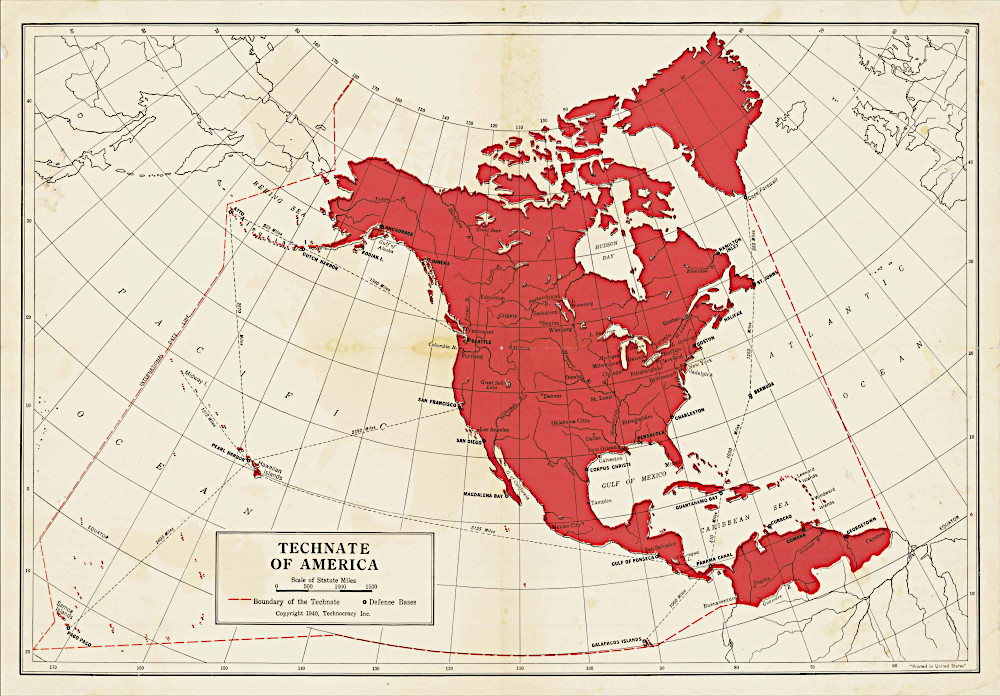
I won't get into the very real dangers of technocracy here, rather i'll hand you off to James Corbett, the fine investigative journalists at Unlimited Hangout and RT, all of whom address the subject in depth in their documentaries, videos, interviews and articles.
How & Why Big Oil Conquered The World | The Corbett Report
Oil. The 19th century was transformed by it. The 20th century was shaped by it. And the 21st century is moving beyond it. But who gave birth to the oil industry? What have they done with the immense wealth and power that it has granted them? And what are they planning to do with that power in a post-carbon world? This is the remarkable true story of the oiligarchs and the world they have created.
Episode 492 - What's Greenland REALLY About? | The Corbett Report
We're told that this is about the mad scramble for resources in the Arctic, and there may be some truth to that, but it's not the whole truth. So, what is this brouhaha over Greenland really about? Let's roll up our sleeves and find out on this week's edition of The Corbett Report podcast.
Interview 1993 - Iain Davis Exposes the Technocratic Dark State | The Corbett Report
From the neoreactionary accelerationists of the Dark Enightenment to the AI-spun social credit web of the NEONERDS, today author and researcher Iain Davis takes us on a whirlwind tour of his new book, The Technocratic Dark State.
The Dark MAGA Gov-Corp Technate - Part 1
What does the title of this article-not to mention each unusual word in it - even mean? This is not a rhetorical question. We urgently need to understand each term. A precise political philosophy underpins each. A combination of these interrelated philosophies has been embraced - either in part or in their entirety - by some of the most powerful people on the planet. If we misapprehend how these controllers and influencers think, we risk blindly accepting whatever world order they wish to impose - and end up wondering how and why we find ourselves subjected to it.
Trump & the Technocratic Tyranny with Iain Davis
Iain Davis joins Whitney Webb to discuss his forthcoming book, The Technocratic Dark State, which explores how the so-called "counter-elites" and tech billionaires behind much of the second Trump administration's policies envisage a world remarkably similar to, and perhaps even worse than, that of the globalist oligarchs long reviled by Trump's electoral base.
Technate, Ohio: How Leslie Wexner and Jeffrey Epstein Built The Silicon Heartland
Ohio has become the new destination for Big Tech data centers and AI infrastructure. The state owes much of its rapid transformation into the so-called "Silicon Heartland" to the now vast array of public-private partnerships pioneered by the state's richest man, Leslie Wexner, and his former money manager and fixer, Jeffrey Epstein.
Palantir's Technological Republic is a blueprint for digital tyranny - RT World News
Palantir Technologies' vision of a "Technological Republic" arrives as a manual for the refinement of the boot, the one destined to remain on the human face, provided the boot remains equipped with the latest predictive sensors. In the spirit of a clear-eyed look at the clock striking thirteen, we must dissect the alliance between corporate algorithmic power and the Zionist state. This is a new Newspeak, where "defense" is a moral debt and "deterrence" is the silent humming of an algorithm deciding who shall disappear.