The details of Iran's Operation True Promise III & its hidden effects | Deep Dive Defense
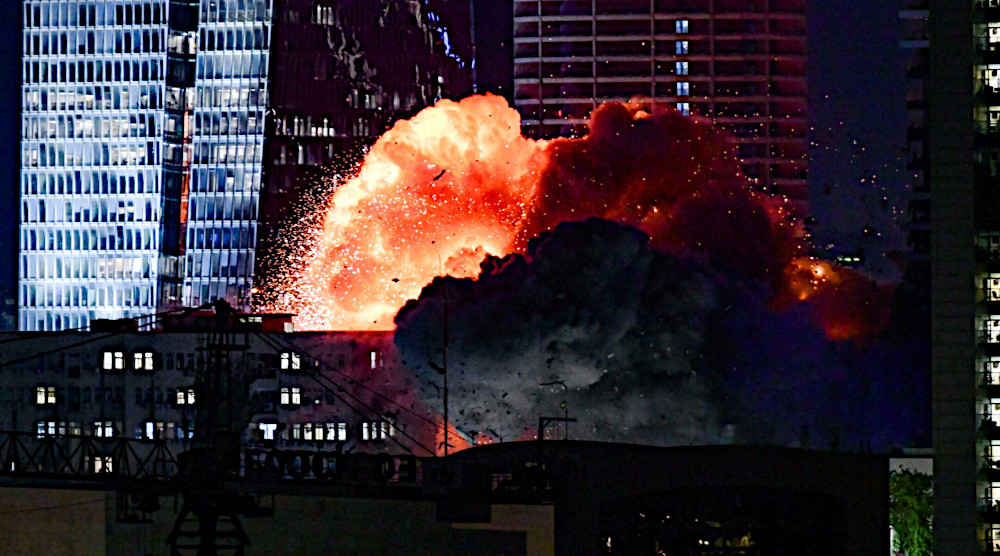
Several crucial points are made in this video, among them:
- The beating that Iran inflicted upon Israel was much greater and more effective than Israel and the United States have admitted;
- The damage done by Israel to Iran was much less effective than Israel and the United States have claimed;
- In is attack on Israel, Iran held back on the assets it committed;
- Iran was very selective in the incoming missiles and drones it decided to intercept, choosing instead to conserve its air defense assets and absorb non-critical damage to surface targets and some civilian casualties;
- As we already knew, Iran is capable of penetrating Israel's air defenses at will, including the so-called 'Iron Dome', Davids Sling, the Arrow system and the U.S. supplied THAAD missile defense systems;
- Israel relies on extremely expensive missile defense systems of a limited capacity;
- Israel did not enjoy air superiority over Iran as it falsely claimed (life went on largely uninterrupted in the cities);
- The strategy employed by Iran during the 12 days of its war with Israel appears to be extremely well thought-out and effective.
Not covered in the video:
- Although shown in the video in at least one instance, some of the targets Israel destroyed were old, obsolete military hardware;
- Some of the targets Israel destroyed were decoys according to Mohammad Marandi, a professor at Tehran University and former advisor to Iran's Nuclear Negotiation Team;
- Iran took roughly 12 hours to respond to Israel's attack and i have heard that this was because Israel hacked it's air defenses, but now i'm not certain this was the case.
Video: The details of Iran's Operation True Promise III & its hidden effects | Deep Dive Defense
ORIGINAL PUBLISH DATE: 6-JUL-2025
ORIGINAL VIDEO: https://www.youtube.com/embed/X7bOtVT50AA
"Welcome to Deep Dive Defense military and aerospace enthusiasts.
Over here we give rare insights you won't hear elsewhere.
After taking a look at how Israel attacked Iran in the previous video linked above, today we turn our focus to Iran's counter strike and the deeper meanings behind it."
Following is the complete transcript as generated by YouTube:
Welcome to Deep Dive Defense military and aerospace enthusiasts.
Over here we give rare insights you won't hear elsewhere.
After taking a look at how Israel attacked Iran in the previous video linked above, today we turn our focus to Iran's counter strike and the deeper meanings behind it.
We must establish a framework which makes sense of the volume of firepower both sides deployed throughout the 12-day conflict along with the targets chosen for attack as well as those deliberately avoided.
The key factor for these decisions is each side's capacity to safeguard its most vital and critical assets and installations.
Israel depends primarily on its missile defenses supplemented by those provided by the United States as its main protective measure.
Iran in turn leverages its passive protection infrastructure, specifically its extensive tunnel complexes constructed over many decades within the country's vast mountain ridges.
While Israel possesses some degree of passive hardening for some of its assets, it relies mostly on active missile defenses whose effectiveness is constrained by the finite quantity of available interceptor missiles.
When looking at how Iran bases the majority of its offensive and defensive assets inside tunnel complexes immune to the type of Israeli air strikes observed during the 12-day conflict, we can see an advantage Iran possesses that Israel does not.
This advantage is the option to retain offensive and defensive assets securely within these tunnel complexes, thereby enjoying the freedom to choose precisely when, how, and at what scale of intensity it wishes to commit those assets.
Grasping these dynamics explains Iran's decision to adopt a war of attrition strategy following the surprise Israeli attack on Friday the 13th of July 2025.
Although Iran's response came swiftly on the night following the Israeli attack, the country's military leadership decided to exercise restraint.
They assessed the effective firepower Israel projected against Iran and quickly concluded that the scale of firepower and the nature of the targets attacked did not pose a vital threat to the nation's existence.
Consequently, the western border regions subjected to standoff weapon attacks chose to preserve their offensive and defensive assets within the hardened tunnel complexes, committing them to the conflict only on a minimal scale.
This development meant that following the degradation of Iran's integrated air defense system across those western and northwestern regions, their air defense posture degraded to an ambush mode of operation.
As observed extensively in the Ukraine war, this means that mobile, compact, low- footprint systems would not engage every target violating the nation's airspace.
Instead, they would remain radio silent to conserve their capability for attacking a higher value target of opportunity.
A tactic exemplified by the shootown of the large heron TPPon drone near Koramabad.
Such an air defense posture inherently generates risk for manned aircraft potentially falling victim to such ambushes.
A risk often deemed operationally unacceptable.
Consequently, this strategy resulted in a significant number of Israeli standoff weapons successfully striking soft above ground assets within those border regions.
Given the extended range of missiles like the air launched Rampage, these strikes penetrated several hundred kilometers into Iranian airspace, inflicting substantial yet non-critical damage upon Iran's military machinery.
Therefore, while Iran's western missile bases and air defense bases opted to weather the storm of the bombardment and avoid a forced escalated reaction triggered by the Israeli surprise attack, Iran's central missile units assumed the responsibility for conducting most of the initial strikes against Israel.
The recognition of two key conditions was important here.
first that Iran's military assets remained largely invulnerable to the Israeli strikes and that the limited scope of the strike along with the effective firepower projected presented no vital threat to the nation's existence.
Second, that this should result in the adoption of a proportional response strategy and deliberate prolonging of the conflict.
Iran was aware that most of its population could sustain normal daily life under the prevailing intensity of warfare.
This stood in stark contrast to Israel, where the population faced the recurring necessity of seeking shelter in bunkers, effectively paralyzing normal life and the nation's economic activity for the conflict's duration.
Iran's calculated, rational decision to avoid overreaction despite the painful human losses suffered on the initial day of the surprise attack delivered a clear message to Israel.
This conflict will be a war of attrition.
Operation True Promise 3 had been publicly announced as being in the planning stages well before the Israeli attack and was explicitly described as a prolonged operation designed to degrade Israeli military capabilities and ultimately eliminate the military threat Israel poses to Iran.
The central strategic component involves exhausting Israel's extremely expensive missile interceptors and depleting its available stockpiles.
During the earlier Operation True Promise 1 in April 2024, an estimated $4 billion worth of interceptors and defenses were expended to protect against the 100 Iranian missiles and hundreds of drones.
Operation True Promise two subsequently revealed a scenario where Israeli missile defenses largely failed systematically or deliberately chose not to engage the 200 missile salvo launch that night, presumably to conserve remaining interceptor stocks.
This situation directly prompted the United States to deploy multiple batteries of THAAD missile defense systems and Eegis destroyers near Israeli waters.
Specifically, in anticipation of Operation True Promise 3.
Critically, beyond the purely military dimension, a severe shortage of available missile interceptors exerts profound influence on a nation's political decision-making calculus.
Depletion of interceptors discourages offensive actions and drastically diminishes available leverage during any subsequent negotiations.
Fully aware of these dynamics, Iran deliberately selected salvo sizes adjusted to maximize the expenditure of missile defense interceptors in strict accordance with its war of attrition strategy.
Indeed, throughout the 12-day conflict's missile strikes, observations confirmed that Israeli and United States missile defense systems consistently committed to engaging Iran's ballistic missile salvos.
Yet, a significant number of impacts were still achieved by those Iranian strikes.
A single such hit could devastate tire neighborhoods.
At this point, a detailed look at the missile types Iran deployed during these strikes is essential.
the almost identical composition to the types used during Operation True Promise 1 and two.
Specifically, the absence of lower-end missiles like the Resvon or higherend systems like the Koramshar family provided clear indications that Iran was neither compelled to deploy all available missile units nor was an all-out counter strike its intended objective.
Hence, the missile selection definitively proves a key point.
Mirroring prior operations, the mid200s and10s vintage EMAD ballistic missile was utilized primarily to exhaust Israel's endoatmospheric interceptors like Arow2.
Simultaneously, the KBAR Shican 1 and two ballistic missiles were employed to deplete exoatmospheric capable interceptors such as the US THAAD system as well as for missions requiring a high probability of destruction against high priority targets.
A principal defeat mechanism for reducing interception effectiveness involves degrading the quantity and quality of sensors used to engage incoming ballistic missiles.
It is highly probable that during the initial nights of the conflict, a core objective of the Iranian missile strikes was to degrade Israel's and the United States missile defense radar assets to a minimal level.
At this degraded state, engagements would still be attempted, but the precise identification and discrimination of actual missiles from their discarded boosters and accompanying decoys would become highly unreliable, a dynamic that inherently forces increased expenditure of missile interceptors and reduces coordination.
Consequently, reports of Iran launching the Fata 1 hypersonic ballistic missile align perfectly within this tactical framework.
Iran's access to its own indigenous imaging satellites augmented by constellations of Chinese and Russian satellites coupled with the inherently low mobility of large expensive missile defense radars are critical enablers of this tactic.
These factors allow a highly penetrative missile like the FATA one to breach even the densest missile defense concentrations and utilize its high precision to strike the critical radars directly.
Among these, the United States AN/TPY2Xand highresolution radar stands as the most wanted target on the list.
Indeed, several nights into the conflict, observations emerged of desperate attempts by Iron Dome batteries to engage ballistic missiles, including one documented instance where 14 interceptors were launched against a single Iranian missile without success, resulting in a direct impact.
It is therefore likely that after this initial sensor degradation phase, the size and types of missile salvos were deliberately chosen to maximize the forced expenditure of interceptors.
This is indirectly indicated by Iran's subsequent launch of smaller salvos that nevertheless achieved impacts on critical targets with the most widely publicized being the strike on the Vitzman Institute.
A clear sign of continuously degrading missile defenses.
Iran's concurrent decision to commit primarily its oldest and low tier missile units to the conflict, reserving only special missions for the KBAR Shakan and Fat1 missiles is also noteworthy.
In the vast majority of Israeli footage showing hits on missile launchers, the oldest, most time-conuming to deploy and most visually detectable types associated with the Godd and Emod missiles were visible.
Strikes on Kbar Sheekchen and Hajkasuma missile launchers were notably rare exceptions.
This visual evidence serves as clear albeit indirect confirmation that low tier missile units were predominantly activated for the operations.
Furthermore, as the conflict progressed beyond the initial phase, the role of the old Godd missile originating from the mid 2000s became increasingly prominent.
These older missile types reliant on liquid propellant and their associated transporter erector launchers teals demand significantly more time for setup and launch preparation.
The operational freedom these units enjoyed involved launching in clusters even during daytime which further amplifies the questionable nature of Israeli claims to have posed a substantial threat to the launchers.
This claim is primarily based on video footage depicting approximately two dozen launchers being struck by miniature munitions.
The majority of these hits likely occurring on the very first day of the surprise Israeli attack, precisely when the Islamic Revolutionary Guard Corps Aerospace Force missile exercise was in its preparatory stages.
These two dozen confirmed destroyed launchers, primarily of the older GodD and AMOD missiles, represent a figure far from the 400 Israel range missile launchers.
the IDF estimates Iran to possess.
Several misconceptions require clarification when discussing Iran's missile strikes against Israel.
Notably, the AMAD missile, the most numerous type employed, reaches hypersonic terminal impact speed.
This characteristic inherently results in reduced accuracy compared to glider equipped missiles like the KBAR Shican 2.
The dynamic delays and associated effects on its guidance system and actuators mean that while it can kinetically outble bleed endopheric interceptors such as the David sling, this capability comes at the cost of lowered accuracy quantified at a circular error probable C of approximately 60 m.
Furthermore, the air power suppression strategy constituting a key mission for Iran's missile forces was deliberately not executed during these strikes.
This omission stemmed primarily from Israel's own constrained attack profile and Iran's inability to safely generate the concentrated high firepower required for this type of mission within the required short time period.
This limitation was imposed by the element of surprise in the Israeli attack and the persistent risk posed by nearby covert sabotage assets which could endanger the vulnerable launcher vehicles during mass firing operations.
Until that threat would not be confidently excluded, no air power suppression missions would be performed.
Overall, a clear mutual deterrence dynamic governed both sides throughout the entire conflict, effectively preventing the involved parties from striking the most painful categories of targets.
Nevertheless, early incidents like the attack on civilians on a busy street in northern Thran, likely done by a rampage standoff missile, breached the taboo of countervalue strikes.
This act is believed to have introduced a countervalue component to the conflict to which Iran responded by targeting civilian targets in reciprocal fashion.
Another particularly noteworthy event was the deployment of two SIL solid propellant ballistic missiles, a type never previously used in combat.
This launch conducted by a central missile base was not only visually spectacular, but also likely constituted an immediate strike request following the detection of a high-v value target within Israel.
The SIL serves as an example of an Iranian missile type possessing the long range and capacity for launch from secure regions that could have been utilized on a much broader scale.
However, Iran intentionally chose not to employ it beyond that.
Viewing the grand strategic picture, both sides ultimately sought to contain the conflict rather than escalate, particularly after Israel realized its surprise attack would not initiate a regime change operation with chance of success.
From Iran's perspective, it became evident that once the attrition phase of the conflict had commenced, a ceasefire under favorable conditions would inevitably materialize.
This expectation was grounded in the understanding that Iran's primary objective was not the total disarmament of the Israeli military, but rather achieving a political consensus with the United States.
This consensus aimed to compel the United States to both persuade Israel to end the Gaza war and to reach a nuclear agreement, lifting the sustained US economic war waged against Iran for decades.
The conflict demonstrabably proved to Israel and the United States that Iran retains the capability to strike at will, even up to the conflict's final hour.
Crucially, there exists no means for Israel to halt or significantly degrade this devastating capability.
It also revealed that the Iranian homeront and population could well endure the conditions experienced throughout the 12-day conflict.
On the other hand, Israel, considering the adverse psychological effects of the missile strikes on its population and the pause of its economic activities, demonstrated an inherent inability to sustain a prolonged war of attrition.
So that's all for today.
If you liked it, give a thumbs up, comment, and subscribe.
It really makes a difference in the YouTube algorithm and is a great support to the channel.
The real enthusiast can become members and given access to exciting membership area material.
Thanks for your support and motivation.