Vaccines - What You Need To Know: Vaccinated vs. unvaccinated
Fully Vaccinated vs. Unvaccinated - Part 1 - Children's Health Defense
During a November 2012 Congressional hearing on autism before the House Committee on Oversight and Government Reform, Dr. Coleen Boyle, the Director of the National Center on Birth Defects and Developmental Disabilities, gave evasive answers to lawmakers pressing her on this point. After considerable badgering, she finally stated, "We have not studied vaccinated versus unvaccinated [children]." That was perjury.
Boyle knew that CDC had commissioned an in-house researcher, Thomas Verstraeten to perform vaccinated/unvaccinated study on CDC's giant Vaccine Safety Datalink (VSD) in 1999 (I summarize Verstraeten's secret findings on slide 2). Verstraeten found a dramatic link between mercury-containing hepatitis B vaccines and several neurological injuries including autism and prepared the study for publication. CDC shared Verstraeten's analysis with the then four vaccine makers but kept it secret from the American public.
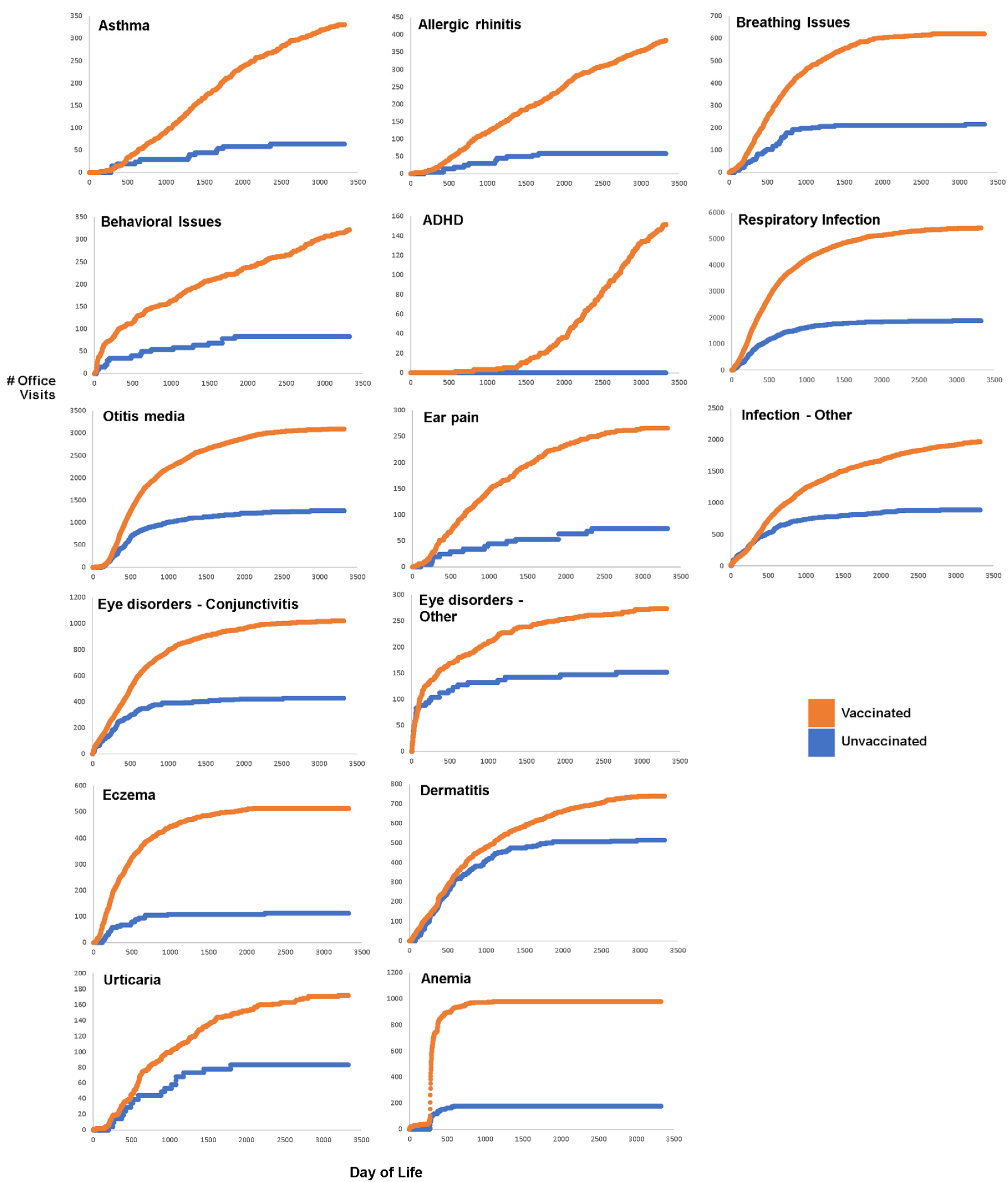
Our reanalysis shows that vaccinated children were sicker in all 22 chronic disease categories listed - a pattern reinforced by two of the most striking findings in the dataset: a 549% higher rate of autism-associated neurodevelopmental conditions and a 54% elevation in childhood cancer in the vaccinated cohort. These signals emerge only when the data are analyzed proportionally, without the statistical distortions used in the original report.
My research leaves me to conclude that unvaccinated children are clearly healthier than those who have been vaccinated. This conclusion is partly founded in personal testimonies of many thousands of mothers who have vaccinated, unvaccinated, or partially vaccinated children, or a combination thereof, but also as a result of several studies where the health of unvaccinated children was directly compared to that of vaccinated children. Among the unvaccinated and lightly vaccinated there is a disproportionate lack of ailments such as rashes, compromised immune systems, allergies, viral infections, seizures, autism and many other health problems which are becoming exponentially more common today.
At the time this article was drafted there were over 1000 videos on the VAXXED-TV YouTube channel and nearly 7000 user submitted testimonials on the Vaxxed website, most of which were interviews conducted with parents across the U.S. who are adamant that their children were injured by vaccines. The VAXXED-TV YouTube channel has since been deleted by YouTube and as i readied this article for publishing, the number of testimonials from parents has reached 125,768. As of 20-Nov-2022, several hundred testimonials are available in the Parents Voice: Children's Adverse Outcomes Following Vaccination document.
I highly recommend that every parent view the powerful documentary film, Vaxxed: From Cover-Up to Catastrophe, in order to understand the risks, conflicts of interest, corruption and criminality associated with vaccines.
Video: Vaxxed: From Cover Up To Catastrophe - Full Documentary (2016)
Despite the persistent and grounded appeals of many healthcare professionals and parents, the CDC has consistently refused to conduct a vaccinated verses unvaccinated study in which the general health between the two is compared. I think we have already outlined several of the reasons for this when we considered the amount of revenue generated by the sales of vaccines, the influence which the pharmaceutical industry wields in both government and the mainstream media and the conflicts of interest that exist at every level. Fortunately a vaccinated verses unvaccinated pilot study was finally conducted by the Children's Medical Safety Research Institute (CMSRI). The 2017 study, Pilot comparative study on the health of vaccinated and unvaccinated 6- to 12- year old U.S. children, compared a broad variety of health issues among 666, 6 to 12 year old vaccinated, unvaccinated and partially vaccinated home-schooled children in the U.S.. The peer-reviewed study was published in the Journal of Translational Science. In the abstract section we read:
In conclusion, vaccinated homeschool children were found to have a higher rate of allergies and NDD [neurodevelopmental disorders] than unvaccinated homeschool children. While vaccination remained significantly associated with NDD after controlling for other factors, preterm birth coupled with vaccination was associated with an apparent synergistic increase in the odds of NDD. Further research involving larger, independent samples and stronger research designs is needed to verify and understand these unexpected findings in order to optimize the impact of vaccines on children's health.
Further along in the introduction section, and interspersed among plenty of the 'how great vaccines are' rhetoric, we read:
Although short-term immunologic and safety testing is performed on vaccines prior to their approval by the U.S. Food and Drug Administration, the long-term effects of individual vaccines and of the vaccination program itself remain unknown [8]. Vaccines are acknowledged to carry risks of severe acute and chronic adverse effects, such as neurological complications and even death [9], but such risks are considered so rare that the vaccination program is believed to be safe and effective for virtually all children [10].
There are very few randomized trials on any existing vaccine recommended for children in terms of morbidity and mortality, in part because of ethical concerns involving withholding vaccines from children assigned to a control group. One exception, the high-titer measles vaccine, was withdrawn after several randomized trials in west Africa showed that it interacted with the diphtheria-tetanus-pertussis vaccine, resulting in a significant 33% increase in child mortality [11]. Evidence of safety from observational studies includes a limited number of vaccines, e.g., the measles, mumps and rubella vaccine, and hepatitis B vaccine, but none on the childhood vaccination program itself. Knowledge is limited even for vaccines with a long record of safety and protection against contagious diseases [12]. The safe levels and long- term effects of vaccine ingredients such as adjuvants and preservatives are also unknown [13]. Other concerns include the safety and cost-effectiveness of newer vaccines against diseases that are potentially lethal for individuals but have a lesser impact on population health, such as the group B meningococcus vaccine [14].
Knowledge of adverse events following vaccinations is largely based on voluntary reports to the Vaccine Adverse Events Reporting System (VAERS) by physicians and parents. However, the rate of
reporting of serious vaccine injuries is estimated to be <1% [15].[...]
A possible contributory role for vaccines in the rise in NDD diagnoses remains unknown because data on the health outcomes of vaccinated and unvaccinated children are lacking. The need for such studies is suggested by the fact that the Vaccine Injury Compensation Program has paid $3.2 billion in compensation for vaccine injury since its creation in 1986 [38]. A study of claims compensated by the Vaccine Injury Compensation Program for vaccine-induced encephalopathy and seizure disorder found 83 claims that were acknowledged as being due to brain damage. In all cases it was noted by the Court of Federal Claims, or indicated in settlement agreements, that the children had autism or ASD [39].
As we move into the results section of the study, under the heading 'Chronic illness', more detail is revealed:
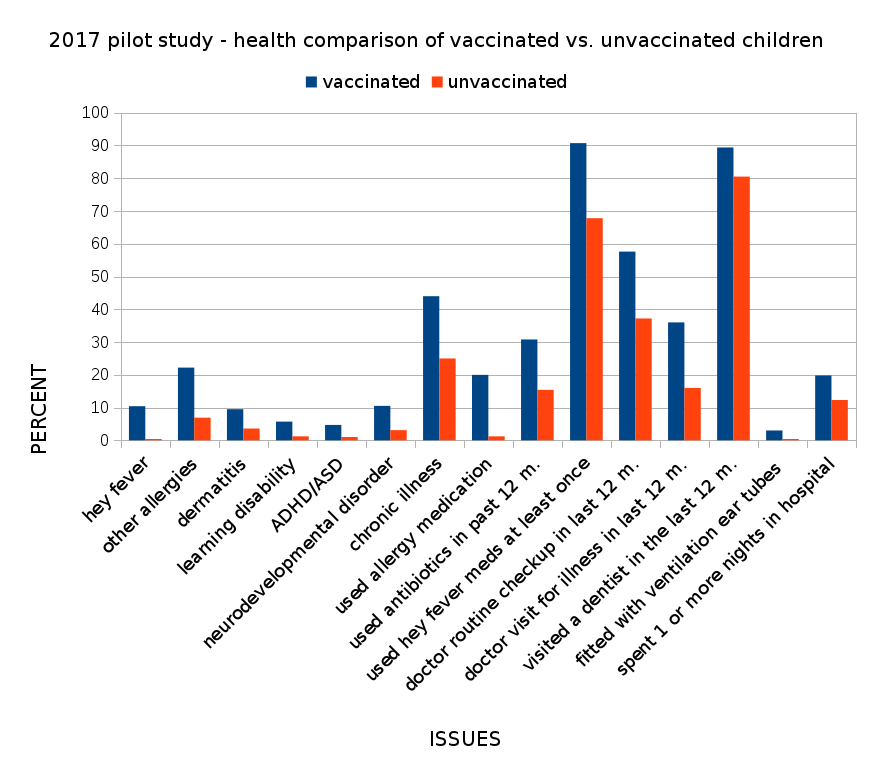
Vaccinated children were significantly more likely than the unvaccinated to have been diagnosed with the following: allergic rhinitis (10.4% vs. 0.4%, p <0.001; OR 30.1, 95% CI: 4.1, 219.3), other allergies (22.2% vs. 6.9%, p <0.001; OR 3.9, 95% CI: 2.3, 6.6), eczema/atopic dermatitis (9.5% vs. 3.6%, p = 0.035; OR 2.9, 95% CI: 1.4, 6.1), a learning disability (5.7% vs. 1.2%, p = 0.003; OR 5.2, 95% CI: 1.6, 17.4), ADHD (4.7% vs. 1.0%, p = 0.013; OR 4.2, 95% CI: 1.2, 14.5), ASD (4.7% vs. 1.0%, p = 0.013; OR 4.2, 95% CI: 1.2, 14.5), any neurodevelopmental disorder (i.e., learning disability, ADHD or ASD) (10.5% vs. 3.1%, p <0.001; OR 3.7, 95% CI: 1.7, 7.9) and any chronic illness (44.0% vs. 25.0%, p <0.001; OR 2.4, 95% CI: 1.7, 3.3).
And a bit later under the heading 'Use of medications and health services', we discover that the vaccinated children in the study consumed significantly more medications than the unvaccinated children:
The vaccinated (combining the partially and fully vaccinated) were significantly more likely than the unvaccinated to use medication for allergies (20.0% vs. 1.2%, p <0.001; OR 21.5, 95% CI: 6.7, 68.9), to have used antibiotics in the past 12 months (30.8% vs. 15.4%, p <0.001; OR 2.4, 95% CI: 1.6, 3.6), and to have used fever medications at least once (90.7% vs. 67.8%, p <0.001; OR 4.6, 95% CI: 3.0, 7.1). The vaccinated were also more likely to have seen a doctor for a routine checkup in the past 12 months (57.6% vs. 37.2%, p <0.001; OR 2.3, 95% CI: 1.7, 3.2), visited a dentist during the past year (89.4% vs. 80.5%, p <0.001; OR 2.0, 95% CI: 1.3, 3.2), visited a doctor or clinic due to illness in the past year (36.0% vs. 16.0%, p <0.001; OR 3.0, 95% CI: 2.0, 4.4), been fitted with ventilation ear tubes (3.0% vs. 0.4%, p = 0.018; OR 8.0, 95% CI: 1.0, 66.1), and spent one or more nights in a hospital (19.8% vs. 12.3%, p =0.012; OR 1.8, 95% CI: 1.1, 2.7) (Table 6)
Here is the same data expressed visually:
In an article written by Suzanne Humphries, MD, titled Vaccination, we read:
There is a paucity of studies comparing never vaccinated children, with partially or fully vaccinated children. In terms of safety studies, a major issue is that most vaccine studies use another vaccine as the control placebo, or use the background substance of the vaccine. There is only one recent study (Cowling 2012) where a true saline placebo was used, rather than another vaccine or the carrier fluid containing everything except the main antigen.That study showed no difference in influenza viral infection between groups but astonishingly it revealed a 5-6 times higher rate of non-influenza viral infections in the vaccinated. It is no small wonder more true placebos are not used in vaccine research.
The title of the Cowling study that Dr. Humphries refers to is Increased Risk of Noninfluenza Respiratory Virus Infections Associated With Receipt of Inactivated Influenza Vaccine. It is published on the Oxford Academic website.
We randomized 115 children to trivalent inactivated influenza vaccine (TIV) or placebo. Over the following 9 months, TIV recipients had an increased risk of virologically-confirmed non-influenza infections (relative risk: 4.40; 95% confidence interval: 1.31-14.8). Being protected against influenza, TIV recipients may lack temporary non-specific immunity that protected against other respiratory viruses.
Dr. Humphries goes on to say:
Needless to say, giving untested vaccines which can often be unknowingly contaminated, and with unproven-effectiveness vaccination is a "medical experiment, and in my opinion, violates the core principles of the Nuremberg Code (informed and unambiguous consent). Most vaccines have never undergone carcinogenicity testing for example, and likewise are rarely studied in pregnant women, which results in people taking vaccines, either by a proclaimed "emergency; by a "public health order from the WHO; or by threat of loss of rights over one's children or of imprisonment; or by threat of being abandoned by the medical professionals supposedly providing care.
[...]
Some vaccine policies have robbed teenagers and adults of the opportunity to get re-exposed and continue with natural immunity. For example, in mothers who were vaccinated against measles, placental transfer of antibodies is limited to a few months instead of over a year in most naturally immune mothers.
Following are excerpts from various studies.
Using survey data from respondents associated with three medical practices in the US, vaccinated children were compared to unvaccinated children for the incidence of severe allergies, autism, gastrointestinal disorders, asthma, ADHD, and chronic ear infections. All diagnoses were based on parental reporting with chart review for confirmation of diagnoses. Cases were stratified with non-cases based on year of birth and sex, and compared using a logistic regression model which also accounted for breastfeeding status and type of birth (vaginal versus cesarean section). Vaccinated children were significantly more likely than unvaccinated children to be diagnosed with severe allergies (OR = 4.31, 95% CI 1.67 - 11.1), autism (OR = 5.03, 95% CI 1.64 - 15.5), gastrointestinal disorders (OR = 13.8, 95% CI 5.85 - 32.5), asthma (OR = 17.6, 95% CI 6.94 - 44.4), ADHD (OR = 20.8, 95% CI 4.74 - 91.2), and chronic ear infections (OR = 27.8, 95% CI 9.56 - 80.8). Vaccinated children were less likely to be diagnosed with chickenpox (OR = 0.10, 95% CI 0.029 - 0.36). Children who were "vaccinated and not breastfed" or "vaccinated and delivered via cesarean section" had the highest rates of adverse health outcomes. In this study, higher ORs were observed within the vaccinated versus unvaccinated groups for several adverse health conditions. Further research is essential to understand the full scope of health effects associated with childhood vaccination.
Few studies have examined what happened to child survival when DTP and OPV were introduced in low-income countries. These vaccines were introduced in 1981 in an urban community in Guinea-Bissau from 3 months of age in connection with 3-monthly weighing sessions. Children were therefore allocated by birthday to receive vaccines early or late between 3 and 5 months of age. In this natural experiment vaccinated children had 5-fold higher mortality than not-yet-DTP-vaccinated children. DTP-only vaccinations were associated with higher mortality than DTP + OPV vaccinations. Hence, DTP may be associated with a negative effect on child survival.
We randomized 115 children to trivalent inactivated influenza vaccine (TIV) or placebo. Over the following 9 months, TIV recipients had an increased risk of virologically-confirmed non-influenza infections (relative risk: 4.40; 95% confidence interval: 1.31-14.8). Being protected against influenza, TIV recipients may lack temporary non-specific immunity that protected against other respiratory viruses.
Conclusion: This analysis suggests that high exposure to ethyl mercury from thimerosal- containing vaccines in the first month of life increases the risk of subsequent development of neurologic development impairment, but not of neurologic degenerative or renal impairment. Further confirmatory studies are needed.
This study investigated the association between vaccination with the Hepatitis B triple series vaccine prior to 2000 and developmental disability in children aged 1-9 years (n = 1824), proxied by parental report that their child receives early intervention or special education services (EIS). National Health and Nutrition Examination Survey 1999-2000 data were analyzed and adjusted for survey design by Taylor Linearization using SAS version 9.1 software, with SAS callable SUDAAN version 9.0.1. The odds of receiving EIS were approximately nine times as great for vaccinated boys (n = 46) as for unvaccinated boys (n = 7), after adjustment for confounders. This study found statistically significant evidence to suggest that boys in United States who were vaccinated with the triple series Hepatitis B vaccine, during the time period in which vaccines were manufactured with thimerosal, were more susceptible to developmental disability than were unvaccinated boys.
Universal hepatitis B vaccination was recommended for U.S. newborns in 1991; however, safety findings are mixed. The association between hepatitis B vaccination of male neonates and parental report of autism diagnosis was determined. This cross-sectional study used weighted probability samples obtained from National Health Interview Survey 1997-2002 data sets. Vaccination status was determined from the vaccination record. Logistic regression was used to estimate the odds for autism diagnosis associated with neonatal hepatitis B vaccination among boys age 3-17 years, born before 1999, adjusted for race, maternal education, and two-parent household. Boys vaccinated as neonates had threefold greater odds for autism diagnosis compared to boys never vaccinated or vaccinated after the first month of life. Non-Hispanic white boys were 64% less likely to have autism diagnosis relative to nonwhite boys. Findings suggest that U.S. male neonates vaccinated with the hepatitis B vaccine prior to 1999 (from vaccination record) had a threefold higher risk for parental report of autism diagnosis compared to boys not vaccinated as neonates during that same time period. Nonwhite boys bore a greater risk.
Vaccination before 1 year of age was associated with increased odds of developmental delays (OR = 2.18, 95% CI 1.47-3.24), asthma (OR = 4.49, 95% CI 2.04-9.88) and ear infections (OR = 2.13, 95% CI 1.63-2.78). In a quartile analysis, subjects were grouped by number of vaccine doses received in the first year of life. Higher odds ratios were observed in Quartiles 3 and 4 (where more vaccine doses were received) for all four health conditions considered, as compared to Quartile 1. In a temporal analysis, developmental delays showed a linear increase as the age cut-offs increased from 6 to 12 to 18 to 24 months of age (ORs = 1.95, 2.18, 2.92 and 3.51, respectively). Slightly higher ORs were also observed for all four health conditions when time permitted for a diagnosis was extended from ⩾ 3 years of age to ⩾ 5 years of age.
Results: The odds of having a history of asthma was twice as great among vaccinated subjects than among unvaccinated subjects (adjusted odds ratio, 2.00; 95% confidence interval, 0.59 to 6.74). The odds of having had any allergy-related respiratory symptom in the past 12 months was 63% greater among vaccinated subjects than unvaccinated subjects (adjusted odds ratio, 1.63; 95% confidence interval, 1.05 to 2.54). The associations between vaccination and subsequent allergies and symptoms were greatest among children aged 5 through 10 years.
The results of our survey with currently 17627 participants show that unvaccinated children are far less affected by common diseases than vaccinated children.
On May 19, 2023, I surveyed the parents of 10,000 kids on a variety of common chronic health conditions.
For every single condition in my survey, vaccination raised the odds that the child would develop the condition; the more vaccines, the higher the risk.
We surveyed over 9,000 boys in California and Oregon and found that vaccinated boys had a 155% greater chance of having a neurological disorder like ADHD or autism than unvaccinated boys.
We could detect no widespread negative health effects in the unvaccinated other than the rare but significant vaccine-targeted diagnosis. We can conclude that the unvaccinated children in this practice are not, overall, less healthy than the vaccinated and that indeed the vaccinated children appear to be significantly less healthy than the unvaccinated.
A new study by James Lyons-Weiler, Ph.D. and Dr. Russell Blaylock supports the conclusions of a study by Dr. Paul Thomas, published in November 2020 and later retracted after an anonymous reader expressed concerns.
Results from the 2019/2020 nationwide Control Group Survey of Unvaccinated Americans (CGS) show that those refusing vaccines are thriving while those accepting them are being injured and met with a multiplicity of grave injuries as well as sudden unexpected death.
What is 10x more lethal than COVID-19? Viral covidiocy. 9 out of 10 COVID deaths were vaccinated in the K, Israel, Chile and Argentina, where case fatality rate was 1300% higher for the vaccinated than for the unvaccinated, plus a higher 40% contagion rate (5% if unvaccinated): the opposite of the narrative. The USA, also showed worse outcomes for the vaccinated than the unvaxxed.