The Manson Affair
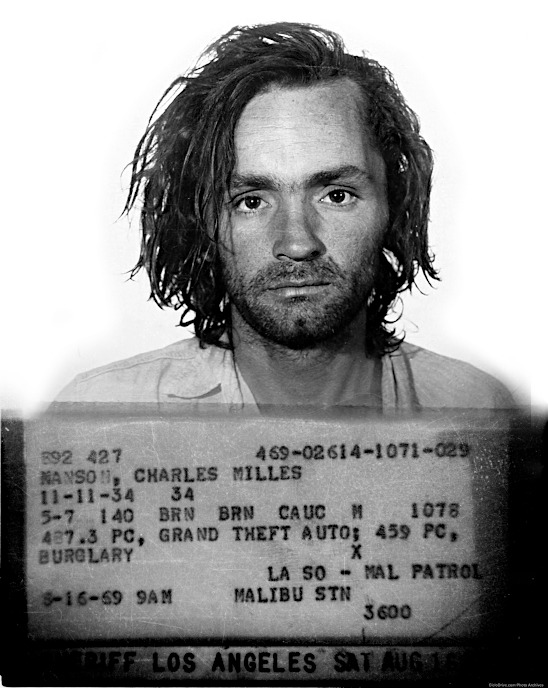
"It needs to be recognized that Charles Manson and his followers served the establishment well." -- Daniel Borgstrom in 'U.S. Intelligence Operatives Appear to Have Intentionally Groomed Mass Murderer Charles Manson', May 1, 2024 (source)
The Charles Manson phenomena stimulates the interest of many people, myself included. There is a massive archive of information regarding Manson on the CieloDrive.com website for those interested in digging into the details. Quite a long time ago i began to realize that there may be some holes in the official Manson story, as well as the origins of the 1960's hippy counterculture. My suspicions were raised upon reading Dave McGowan's book, Weird Scenes Inside the Canyon: Laurel Canyon, Covert Ops & the Dark Heart of the Hippie Dream. Dave first published his book on his website, The Center for an Informed America. Free for anyone to read, he gave it my preferred title, Inside The LC: The Strange but Mostly True Story of Laurel Canyon and the Birth of the Hippie Generation (archived copy). Although i disagree with some of McGowan's other writings, i think the LC book was well researched.
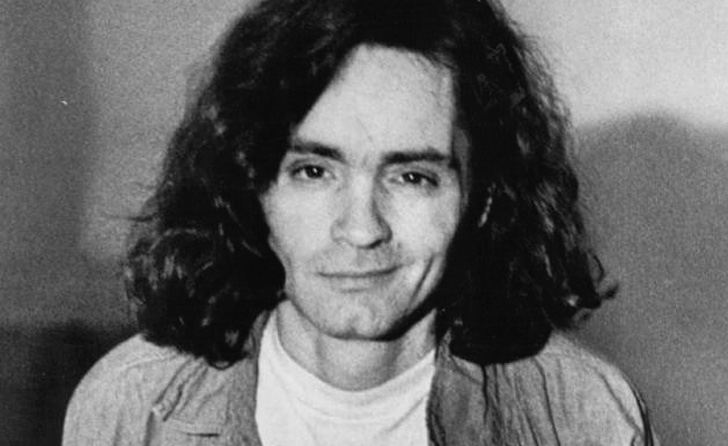
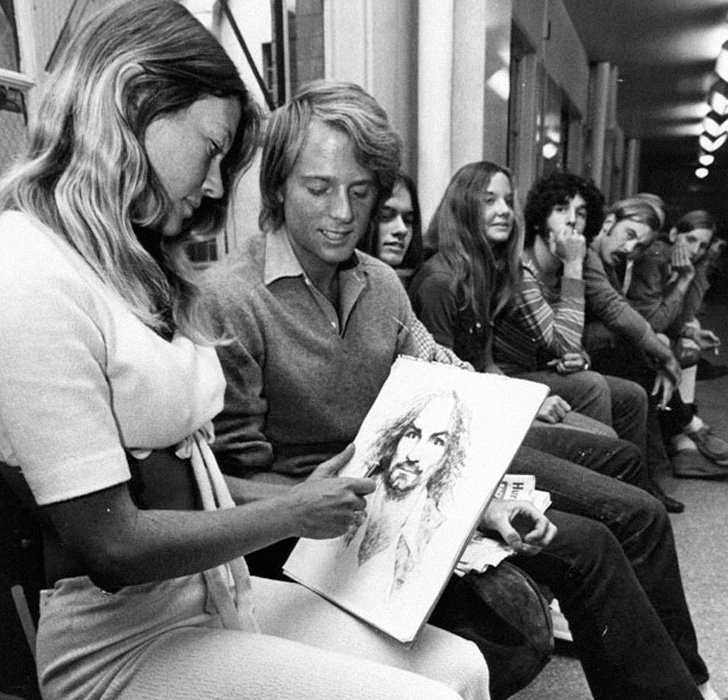
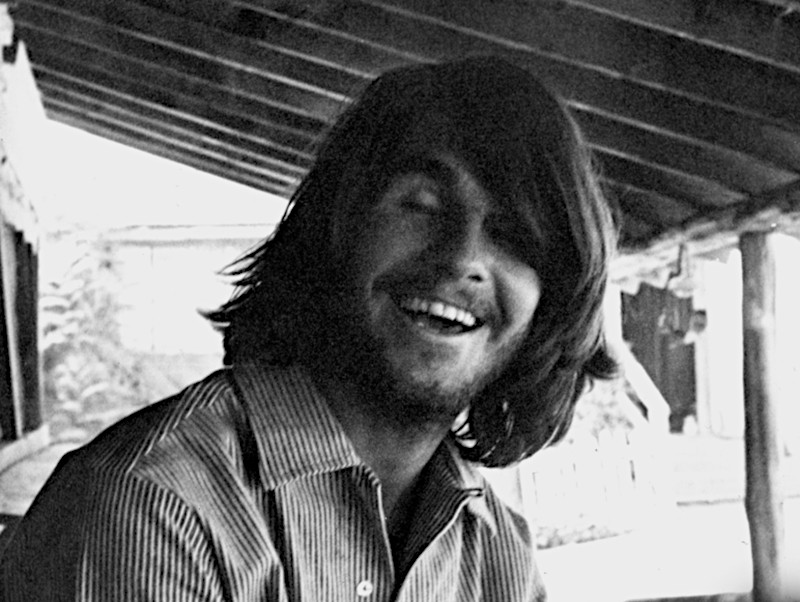
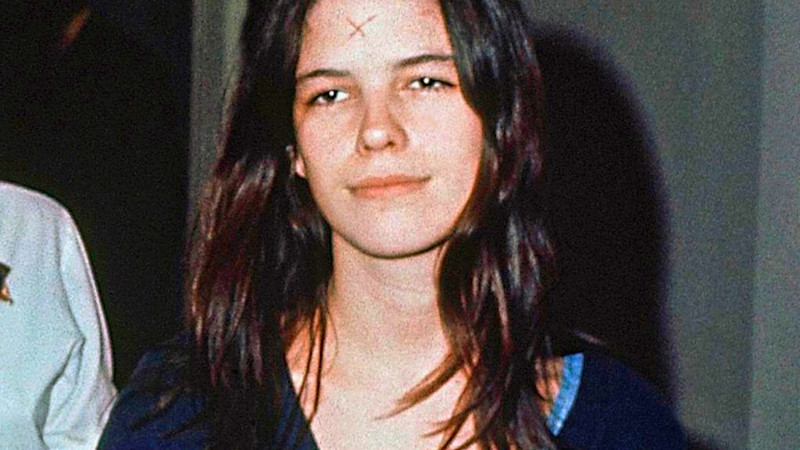
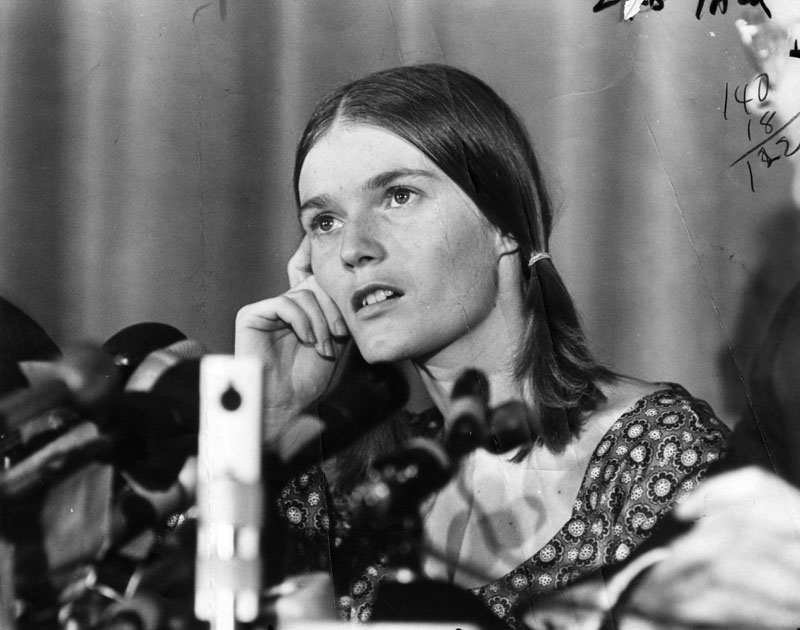
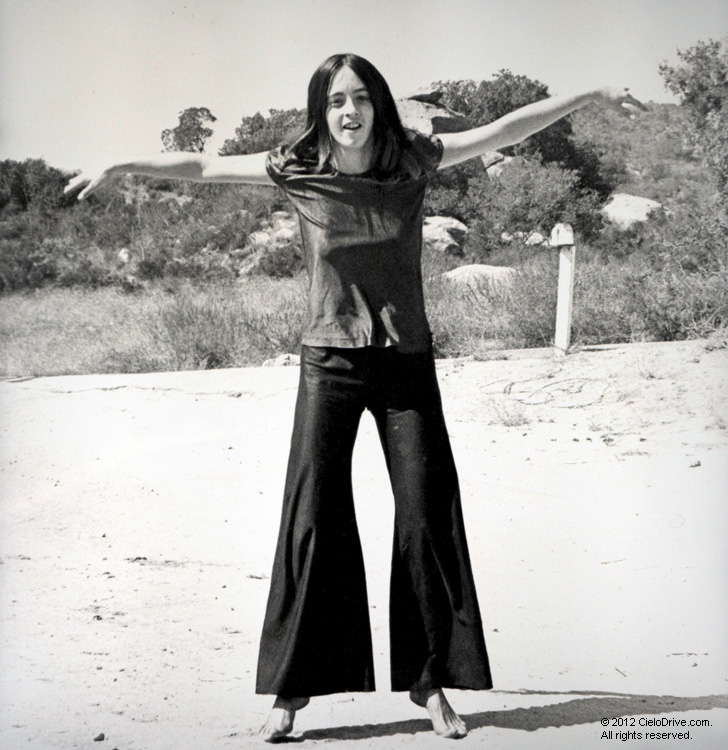
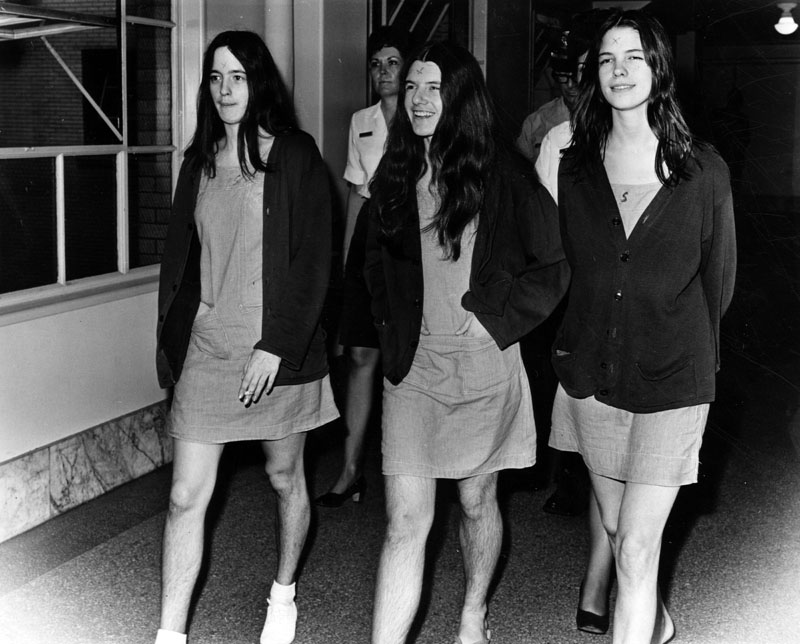
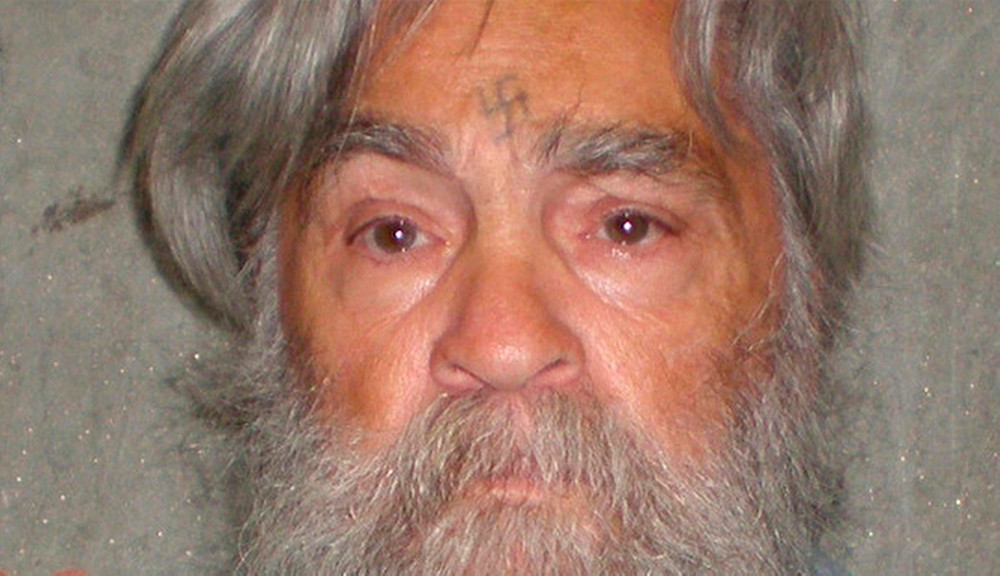
Manson did not appear to identify with the hippie movement, nor did he appear to be particularly anti-war or opposed to violence in general. Both Manson and some researchers are adamant that he was neither and i don't find that difficult to believe given that McGowan wrote that many icons of the '60s counterculture movement, particularly within the music scene, actually had a strong distaste for the hippies. Manson, above all, was a vicious criminal, though probably not inherently so.
Dave crossed the finish line in 2015 after battling cancer, a disease which, incidentally, the CIA, with help from Judy Vary Baker--Lee Oswald's New Orleans mistress--was working to weaponize so they could whack Fidel Castro who was highly critical of U.S. policy (you can read more about that here). Jacob Leon Rubenstein, better known as Jack Ruby--the man who shot and killed Oswald and who was falsely convicted of assassinating John Kennedy--was also a victim of a fast acting cancer, as was Hugo Chavez, the former and beloved president of Venezuela who the CIA had been trying to oust for years. Fast growing cancers is precisely what Judy Baker had been developing, though she claims she was unwittingly drawn into the CIA's Castro program, her real ambition being to find a cure for cancer, a goal which could obviously be aided by speeding up the growth of cancer cells for experimentation purposes.
McGowan documented a plethora of odd coincidences, contradictions and deaths within the music industry and the hippy generation, much of it centering around the Laurel Canyon area of Los Angeles which wasn't far from where he lived. Mentions of Charlie Manson pepper his book where he tells us about how Manson was a regular in the LC music scene, along with many top music personalities.
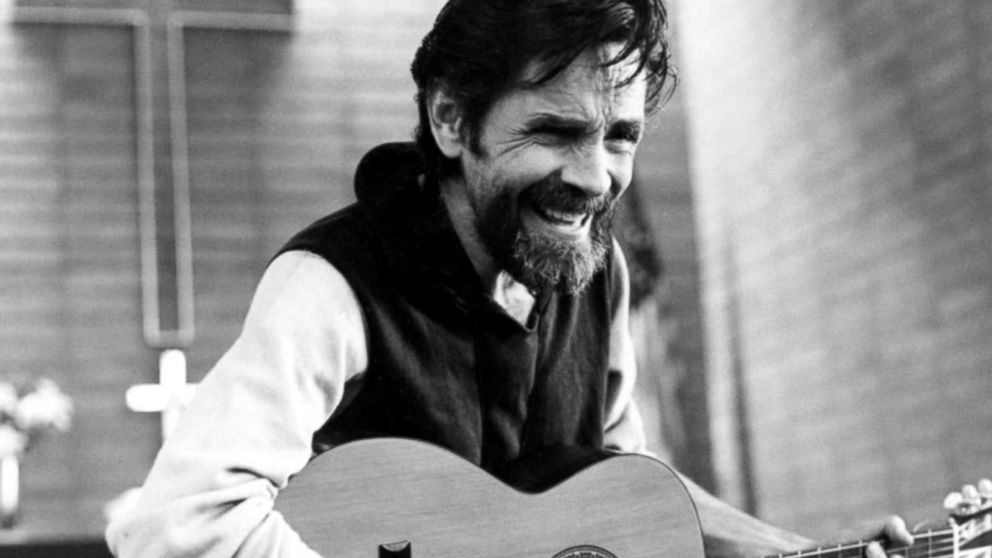
Also making the rounds in Laurel Canyon was America's favorite psychopath, Charles Manson. And Charlie and his "Family" weren't just a peripheral flock of crazed killers among the Laurel Canyon sovereigns; to the contrary, the Family mingled with many of the Canyon's rock stars. Manson even laid down tracks in Brian Wilson's home studio, stunning the likes of Neil Young.
In one account, Dave visited Murphy Ranch, a large, abandoned, self-sufficient camp deep in Rustic Canyon, 9 miles from Laurel Canyon. Dave writes that the remote enclave was accessible via a stairway of 512 steps, though he also mentions an underground tunnel system. "It was all so very Mansonesque, and, ironically enough, Manson and his crew spent an entire summer camped out at a home that was within a two-mile hike of this curious place."
It is the kind of place that seems tailor-made for Charlie and his Family--remote and secluded, yet accessible by the Family's custom-built dune buggies; with just enough crumbling infrastructure to provide rudimentary shelter for the clan; and with elaborate security provisions, including sentry positions and a formerly electrified fence completely encircling the fifty-acre compound (as well as, by some reports, an underground tunnel complex). And it was located just a short hike up the canyon from the place that Charlie Manson called home in the summer of 1968.
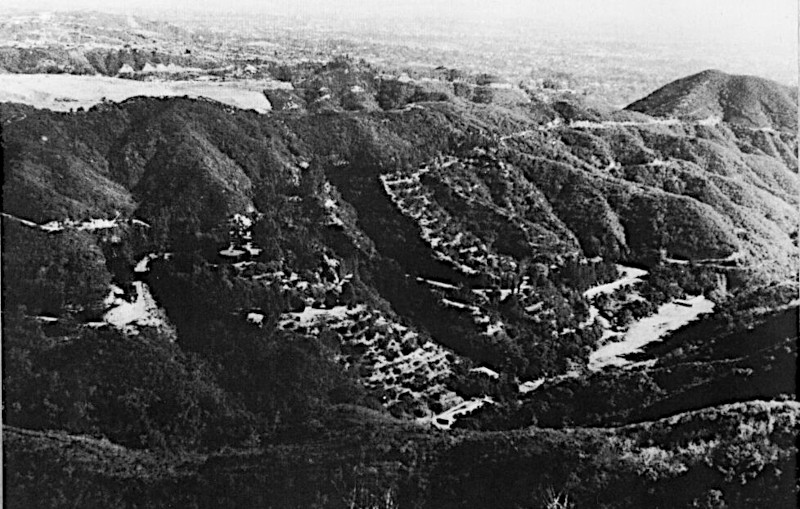
The startling take-away from McGowan's book is that a lot of the most popular music artists of the '60s, many of which knew and associated with Manson, had ties to the U.S. military and/or intelligence community which implies that the hippy movement was engineered, or at least co-opted, for political reasons, in part to marginalize those protesting the United States' involvement in the Vietnam war, the build-up to which was based on the Gulf of Tonkin event where the U.S. claimed to have had its warships attacked by a North Vietnamese torpedo boat. One of the attacks never occurred and it is highly speculative as to whether the other one happened. The Navy Admiral on the scene was George Morrison whose son was Jim Morrison of The Doors.
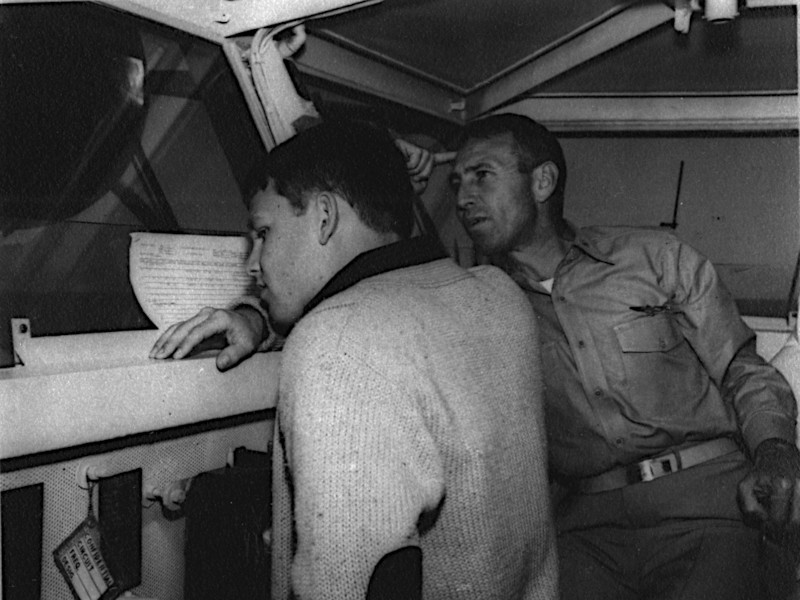
Also in Laurel Canyon was a state of the art Air Force film studio that was frequented by many of the top names in Hollywood. The facility has been sold several times and today is apparently owned by actor Jared Leto, an activist who supports degenerate lifestyles.
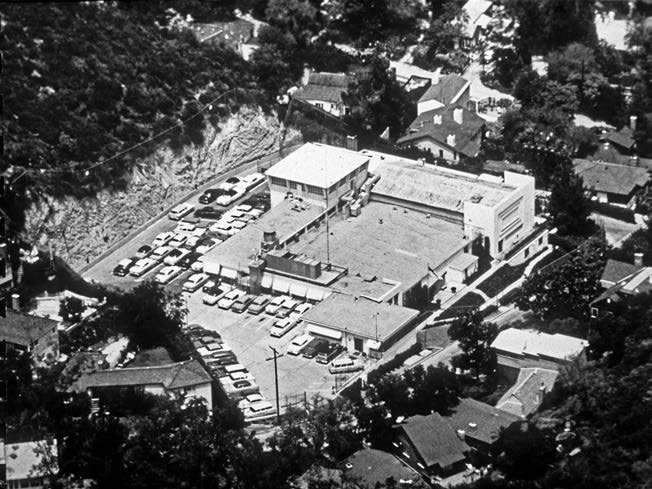
Form an article by the Laurel Canyon Association, 20th Century Canyon History:
In 1947, the Army Air Corps built its top-secret movie production studio on Wonderland Park Avenue. Military training films and Department of Defense documentaries were churned out, including a particularly famous series on the above ground nuclear tests in Nevada. The studio was deactivated in 1969, and thanks to the efforts of the Laurel Canyon Association, it was prevented from being zoned for further commercial activity.
Some of the no-mooners--those who believe NASA faked the Apollo Moon landings--posit that Kubrick filmed the Apollo 11 Moon shot in the canyon's Air Force studio and then referenced his fakery in his blockbuster film, The Shining. There's a scene in the film where Danny is playing with some toys on a carpet having a pattern resembling the launch pad configuration at the Kennedy Space Center and when he stands up we see he's wearing an Apollo 11 tee-shirt.
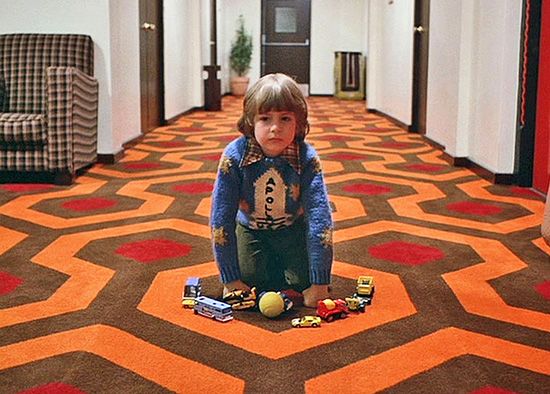
Kubrick was a perfectionist who paid intimate attention to detail. The scene is a little freaky, for sure, however there is no shortage of other subtle, underlying meanings in it (those who have seen The Shinning thinking they watched a horror movie have missed the boat - i highly recommend the documentary, Room 237).
Returning to Manson, the catalyst for this article was my reading of another by John Vibes titled, Reporter Uncovers Manson Family Connections to CIA and Hollywood (archived copy). The reporter Vibes refers to is investigative journalist Tom O'Neill who has researched the Manson affair for 20-odd years, the result of which is available his book, Chaos: Charles Manson, the CIA and the Secret History of the Sixties. The article is a short but interesting read.
As O'Neill began reporting on the story and conducting interviews with police and prosecutors involved in handling the case, he found significant evidence that some kind of cover-up was taking place. Upon further investigation, he learned that Manson was far more connected in Hollywood and the entertainment industry than initially believed.
In fact, there is compelling evidence that Manson was a figure somewhat similar to Jeffrey Epstein, who was connected to high profile figures through a child trafficking operation.
[...]
The case becomes even more suspicious when considering that Manson and his cult seemed to be protected by the government and local law enforcement. Manson had committed multiple crimes while on parole, but was released on numerous occasions. O'Neill documents how the LAPD knew what Manson was up too for a long time and did nothing, and may have even looked the other way in previous murder cases involving the family.
[...]
One of the most interesting angles revealed in this new research is that the Manson family was in regular contact with a notorious doctor who worked in the CIA's MK Ultra mind control experiments. Louis West, the UCLA psychiatrist who performed Jack Ruby's controversial psychiatric evaluation, was also a major player in the CIA's mind control experiments.
[...]
Many of the files detailing what happened during Project MK Ultra were destroyed shortly after the public learned of the program's existence, so the extent of West's research may never be known. However, O'Neill's research provides plenty of circumstantial evidence that West was working on mind control experiments involving the training of remorseless assassins, using a combination of hypnosis, LSD, and sleep depravation. Is it a mere coincidence that Manson used these very techniques to train once-innocent people to kill on command?
O'Neill discusses his book in a 1999 audio interview conducted by William Ramsey, Author Tom O'Neill discusses Chaos: Charles Manson, the CIA and the Secret History of the Sixties.
In a 2021 interview by Danny Jones, O'Neill discusses some of the items he left out of Chaos, including information regarding the Jim Jones-Peoples Temple affair and the Sirhan-Kennedy assassination where he again discovered connections to the CIA, including some of the same players as in the Manson case. He also hints at other notable incidents of that period where the CIA was involved. Tom also spoke of a new book which will include these details, stating it probably wouldn't take long to write given that much of the required material was gathered during his 20 year investigation of the Manson case. As of May, 2024 however, the book has yet to materialize.
There is no doubt that Manson was a psychotic, manipulative loonie, but with a measured IQ of 109 in one instance and 121 in another according to O'Neill's book, he was an above average loonie who had some highly controversial albeit accurate opinions. For example he was rightly critical of Zionist Jewry and their coveted victim status which dates back prior to Hitler's Germany and the alleged genocide of 6 million Jews, an event which the state of Israel and many Jews continue to exploit for social, political and financial reasons to the detriment of non-Jews. Manson's opinion of Jewry's obsession with the alleged Holocaust is of particular interest to me because i've studied the subject myself. Some of Manson's thoughts can be gleaned from a remarkable interview he gave while in prison (here's a direct link to the video file and a slightly longer version is available here).
During Joe Rogan's 2020 interview, O'Neill provides some very interesting details regarding the CIA's MKULTRA brainwashing program and how Jimmy Shaver, a U.S. Airman with no criminal record, who was convicted of brutally raping and murdering a 3 year old girl, claimed to not have any memory whatsoever of the event. O'Neill questions whether Shaver may have been a victim of MKULTRA and 'Jolly' West, who was tied to the CIA.
The following video series by 'Thoughtful Ape', Charles Manson, LSD and The CIA, provides a brief but interesting summary of Tom O'Neill's book.
Charles Manson, LSD and The CIA - Episode 1, Charles Manson, LSD and The CIA - Episode 2
The mystery surrounding Charles Manson's ability to brainwash his followers might have been solved. Recent discoveries, largely made by Tom O'neill and published in his book Chaos, point toward Manson being involved in the infamous CIA mind control program MKULTRA. This series will present the evidence for this hypothesis.
The following excerpt is from the Mind control programs (archived copy) page on the CAVDEF website, emphasis added:
For decades, the US intelligence community has devoted substantial resources to studying mind control: subverting an individual's free will and placing it under the influence of others. One of the most well-known such programs is the CIA's MKUltra project, which has often become synonymous with all US government research into mind control. In reality, there have been numerous overlapping mind control programs by several different US intelligence agencies, including the OSS, CIA, and military intelligence. The CIA has claimed that its research ended in the early 1970s and was met with little other than failure. There is, however, a substantial amount of evidence suggesting that mind control research was quite successful, has been employed in covert operations abroad and at home, and secretly continued beyond its official termination, frequently using cults as deniable fronts. For the US intelligence community, the end goal of mind control is not merely controlling individuals, but shaping entire societies, a doctrine epitomized in the Phoenix Program and Michael Aquino's concept of "Mindwar".
After reading O'Neill's book, the similarities between the Manson cult and Jim Jones' Peoples Temple cult struck me:
- a charismatic leader able to attract vulnerable followers
- operations moved to remote areas
- large quantities of drugs
- rigid obedience and brainwashing
- physical and emotional violence, including murder
- unusually frequent visits to a nearby clinic, ostensibly to be monitored
- CIA connections
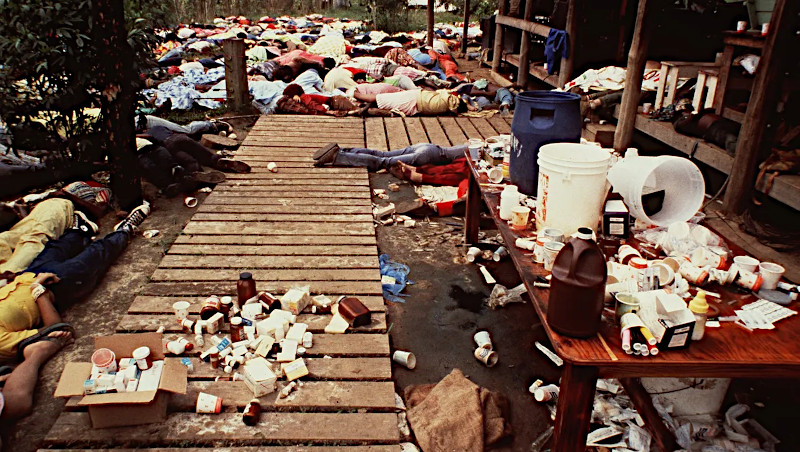
Nine years after the Tate-LaBianca murders, the Peoples Temple cult ended with the murder and suicide of approximately 900 people (many victims were shot or forcibly injected with cyanide, a fact often omitted by the mainstream media). The phrase, "don't drink the Kool-Aid" is associated with the Peoples Temple event, though the cyanide laced concoction was actually prepared using Flavor Aid. The drugs and brainwashing methods employed were similar to those used during the CIA's MKULTRA program, whereas the drugs used by the Manson cult seem to consist largely of those common among hippies, particularly LSD, though there is evidence to suggest other drugs were employed. I have to wonder whether the Peoples Temple experiment was not a progression of what was learned by the CIA as a result of the Manson case.
Regarding the connections O'Neill makes between the Manson cult and the CIA's Phoenix and CHAOS programs, which were essentially designed to infiltrate and destroy movements opposed to U.S. interests, we see the same tactics being employed today, in 2024, in universities across the U.S. and Europe where students are protesting the wanton slaughter of Palestinians by Israel, an ongoing genocide subsidized largely by the U.S. government which has long been a subject of the Jewish State. Once again 3rd party provocateurs are infiltrating these protests and inciting violence and, once again, legitimate protesters are being beaten, arrested and demonized, not only by the mainstream media, but also by some of the alternative media. These tactics, used by local police, the FBI, and the CIA, against Americans, are often seen when a political movement grows large enough to threaten the status quo and in many cases bloodshed results. The Kent State killings are a stunning example where the U.S. National Guard used deadly force to quell those protesting the Vietnam War.
Any prosecutor can convict a guilty man. It takes a great prosecutor to convict an innocent man.
Vincent Bugliosi was the prosecuting attorney in the Tate-LaBianca murder trial. Bugliosi was a corrupt, lying, violent, ego fueled waste of human life who had badly beaten his mistress, Virginia Cardwell, whom he had impregnated, because she refused to have an abortion. Cardwell had a miscarriage as a result. O'Neill writes about many of Bugliosi's illegal and immoral activities throughout his book, some of which are covered in detail in chapter 12.
No sooner was the milkman imbroglio resolved than Bugliosi fell into another fiasco, again abusing his connection to the criminal justice system to straighten it out. His mistress, Virginia Cardwell, the single mother of a five-year-old, told him she was pregnant. It was his. With visions of public office still dancing in his mind, and Helter Skelter on the eve of publication, he ordered Cardwell, a Catholic, to get an abortion. She refused, but after Bugliosi threatened her and gave her money for the procedure, she lied and said she'd done it. He wasn't about to take her word for it. He got her doctor's name, called him, and learned that she'd never been to see him, after which he headed to her apartment and beat her so savagely that she suffered a miscarriage. He choked her, struck her in the face several times with his fists, threw her onto the floor, pulled her up by her hair, and threatened to kill her if she had the baby, saying she wouldn't leave the apartment alive if she lied to him: "I will break every bone in your body--this will ruin my career." Bruised and battered, Cardwell gathered herself and went to the Santa Monica Police Department, where she filed a criminal complaint. The cops photographed her bruises and then, evidently, did nothing.
That evening, an eagle-eyed reporter spotted the incident on the police blotter and wrote about it in the next day's paper. Bugliosi returned to Cardwell's apartment that morning, this time with his secretary. The pair held her hostage for four hours until she agreed to tell the police she'd filed a false complaint the previous day.
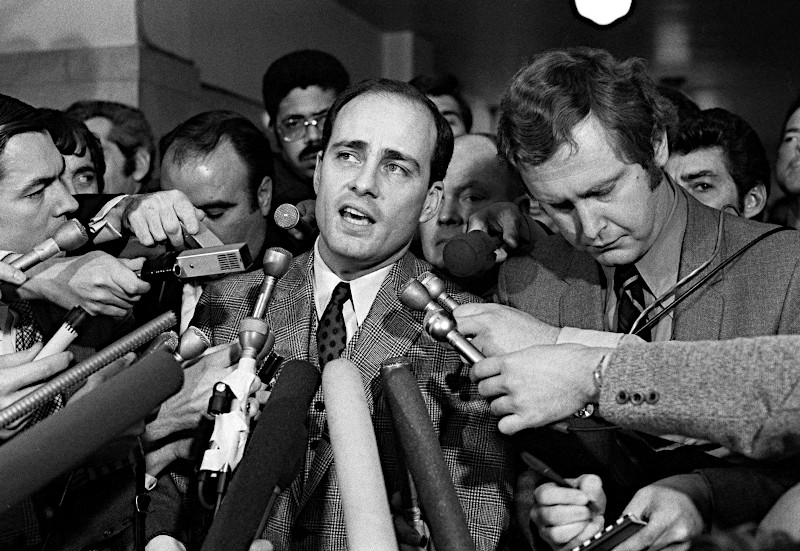
The following excerpts are from O'Neill's fantastic book, Chaos: Charles Manson, the CIA and the Secret History of the Sixties, which consumed approximately 20 years of his life.
Prologue
Another one of my sources had tipped off Vince [Bugliosi] about my reporting, giving him the ludicrous idea that I believed he'd framed Manson. That was dead wrong. I've never been a Manson apologist. I think he was every bit as evil as the media made him out to be. But it is true that Stephen Kay--Vince's coprosecutor on the case, and no friend of his--had been shocked by the notes I'd found in Vince's handwriting, telling me they could be enough to overturn all the verdicts against Manson and the Family. That was never my goal, though. I just wanted to find out what really happened. "I don't know what to believe now," Kay told me. "If he [Vince] changed this, what else did he change?"
Chapter 1: The Crime of the Century
The trial was the longest and most expensive in U.S. history at the time. It wasn't as straightforward as it might seem, because Manson himself hadn't actually murdered anyone. He hadn't set foot in the Tate home at all, and though he'd entered the LaBianca home, he left before his followers killed the couple. That meant Manson could be convicted of first-degree murder only through a charge of conspiracy. According to the legal principle of vicarious liability, any conspirator was also guilty of the crimes committed by his coconspirators. [...] Bugliosi had to show that Manson had a unique ability to control his followers' thoughts and actions--that they would do whatever he asked, even kill complete strangers.
[...]
Ironically, as his followers became more and more robotic, Manson taught them that people in the straight world "were like computers," the Family's Brooks Poston wrote. [...] On the stand, Susan Atkins described Sharon Tate as an "IBM machine--words came out of her mouth but they didn't make any sense to me."
For a Family novitiate, the goal was to burn yourself out, to take so much LSD and listen to so much of Charlie's music that you returned "to a purity and nothingness" resembling a new birth, Tex Watson wrote. This was called going "dead in the head," and it let you incorporate into the collective, sharing "one common brain."
Bugliosi had to use a little prosecutorial hocus-pocus to tell stories like these. He argued that the Manson women had been psychologically compromised, but he didn't assert that Manson had actually created his killers.
[...]
When it came time to decide on the death penalty, though, the defense called a series of psychiatric experts who disagreed. Manson had brainwashed his followers, they said, and those followers couldn't be culpable for the murders.
12bytes: Can there be any doubt they were brainwashed? Call me crazy, but somehow i have trouble imagining that Leslie Van Houten, for example, a middle-class prom queen with no history of violence, is likely to choose 'mass murder' as a career path.
[...]
What no one brought up was how someone like Manson, with little formal education and so much prison time under his belt, had mastered the ability to control people this way.
Chapter 2: An Aura of Danger
"The only thing that I can tell you about this Manson," [Corrine Calvet, a French actress] said, her accent inflecting the words with glamour and gravity, "is that Charlie Tacot brought him and the girls to a party at our house. Two hours after they were there, I caught Charlie Manson taking a piss in my pool. I told Charlie Tacot to get them out of here and they left. After the tragedy happened, the FBI came by and told me I was next on their list to be killed."
[...]
As he grew more comfortable, Tacot made an unexpected revelation: at the time of the murders, he worked for an intelligence agency--he wouldn't say which--and reported to Hank Fine, a veteran of the army's Military Intelligence Service (MIS).
[...]
"Don't write this stuff," he implored me. "You'll get killed. These are very dangerous men, they'll find you and kill you." (That was a warning I'd hear a lot from various parties over the years.) Tacot reminded me that Bugliosi, when he wrote Helter Skelter, had given pseudonyms to him and his friends, and not just for the sake of politeness. "He was afraid American intelligence would kill him if he exposed us," Tacot claimed. He added that Bugliosi was "an asshole" who'd never interviewed him or Billy. "Vincent Bugliosi knows to keep his mouth shut. I'd've got him killed. I didn't tell him that--didn't have to."
[...]
Fine, who'd been a movie PR man from the 1940s until his death in 1975, had been in the Office of Strategic Services (OSS), the counterintelligence agency that oversaw the MIS and evolved into the CIA after World War II. His work often seemed to combine Hollywood and spycraft.
[...]
I sunk a lot of hours into cultivating sources like Tacot, Doyle, and the crowd surrounding them. They'd been so close to the Tate murders that they were suspects, and yet they'd assumed no role in the mythology surrounding the events of August 9. Bugliosi, like the LAPD, had summarily acquitted them of any involvement in the killings--they were his book's classic red herring. But I still wasn't convinced. In their sleazy, run-of-the-mill criminality, their motivations seemed much more viable than a lofty idea like Helter Skelter.
[...]
"Charlie Baron was very close to Jay," Joe [Torrenueva] told me in our third conversation. He added: "Charlie killed people." When Baron was a young man during Prohibition in Chicago, he "shot two guys who were going to kill him for fixing a fight." He later went to Havana to run casinos for Meyer Lansky, another mob figure. When he returned to the United States, he was Lansky's eyes and ears at the new Sands Casino in Vegas.
12bytes: As a side note, Meyer Lansky, a Jew, was a very powerful figure in the "Italian" mafia (many of the key figures were Jewish) who fled to Israel after his casino operations in Cuba were shut down by Fidel Castro who was targeted by the U.S. government and the CIA.
Chapter 3: The Golden Penetrators
Without [Terry] Melcher, there would have been no murders at 10050 Cielo Drive. He was the clearest link between Manson and the Hollywood elite. A music-industry bigwig, he'd promised Manson a record deal only to renege on it. The official story was that Manson, reeling from the rejection, wanted to "instill fear" in Melcher--so he chose Melcher's old house on Cielo Drive as the site for the first night of murders. He knew that Melcher didn't live there anymore. He just wanted to give the guy a good scare.
This was a vital point in the case. According to Bugliosi, Manson never went to the house the night of the murders--he just sent his followers there and told them to kill anyone they found. To convict Manson of criminal conspiracy, then, and get him a death sentence, Bugliosi had to establish a compelling, premeditated reason that Manson had picked the Cielo Drive home. Terry Melcher was that reason.
[...]
If Manson had wanted to kill Melcher, he could have. He had Melcher's new address in Malibu. Gregg Jakobson, a musician and a friend of the Beach Boys, had testified at the trial that Manson called him before the murders, asking him if Melcher had a "green spyglass."
"Yes, why?" Jakobson answered.
"Well, he doesn't anymore," Manson said. The Family had "creepy-crawled" Melcher's Malibu home--that's what they called it when they dressed up in black and sneaked around rich people's places--and stolen the spyglass.
Chapter 4: The Holes in Helter Skelter
In the crossed-out sections of Bugliosi's notes, to my astonishment, DeCarlo described three visits by Terry Melcher to the Manson Family--after the murders.
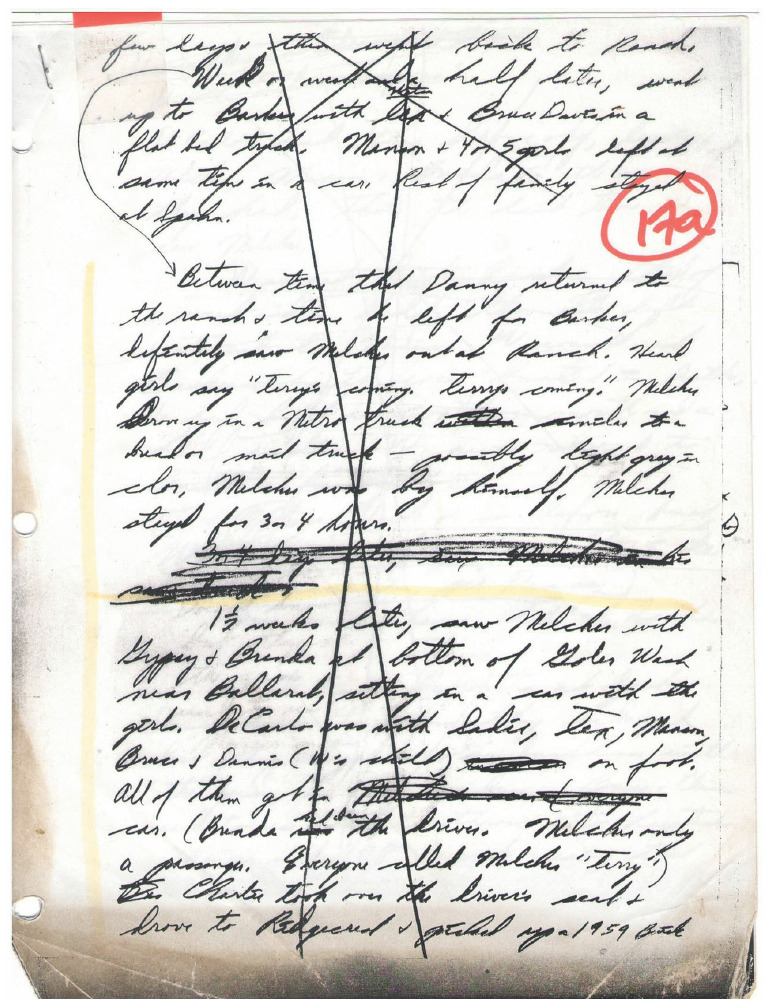
[...]
Three different times on the stand, always as a witness for Bugliosi, Melcher lied about not seeing Manson after May 1969. Next, I pulled out Danny DeCarlo's testimony to see if Bugliosi had ever asked him about Melcher. It never happened.
[...] Without DeCarlo's testimony, Bugliosi said he might never have gotten his convictions.
[...]
Clearly, this was information Bugliosi didn't want before the jury. But why? Was it simply because any postmurder visits by Melcher undermined the Helter Skelter motive? Bugliosi argued that Manson chose the Cielo house to "instill fear" in Melcher, as Susan Atkins said. But if Melcher were with Manson after the murders, where was the fear?
[...]
As I read the DA's file more carefully, I found that every single thing DeCarlo and Bugliosi had discussed that day was later repeated by DeCarlo on the witness stand--except the descriptions of Melcher's visits after the murders. In his notes, Bugliosi had crossed out all of these references.
The defense should have received a copy of the DeCarlo interview. Bugliosi was legally required to turn over all his evidence to the other side.
[...]
That made this document all the more legitimate, in [Paul] Fitzgerald's eyes, and more sensational. "I'm very shocked." He argued that Bugliosi, who was "extremely deceitful" and "the robot he claimed his defendants were," had written "a script for the entire trial," getting witnesses to agree to his narrative in advance.
[...]
I asked [Stephen Kay, attorney in the Los Angeles DA's office] whether this evidence would be enough to overturn the verdicts against Manson and the Family. Yes, he conceded--it could get them new trials, and it would mean big trouble for Bugliosi. If he were found guilty of suborning perjury, he would technically be eligible for the death penalty, since that was the maximum possible sentence in the Manson case.
12bytes: And there you have it; those that committed the Tate and LaBianca murders were likely not acting of their own free will and therefore should not have been convicted of first degree murder. I suspect 'Tex' Watson may be an exception; there seems to be something deeper going on with Watson, but at this point i don't know what that might be.
Chapter 5: Amnesia at the L.A. County Sheriff's Office
On August 16, 1969, LASO [Los Angeles County Sheriff's Office] descended on the Spahn Ranch en masse. Just past six in the morning, as the sun was creeping up and most everyone was still asleep, more than one hundred officers swarmed the property, led by the organization's elite SWAT team. Armed with handguns, AR-15 rifles, and tear gas, they were assisted by two helicopters, numerous ATVs, and a fleet of some thirty-five squad cars. Surrounding the ranch's two hundred acres, they descended from five prearranged outposts with a show of force the likes of which no one in LASO had ever seen before. They arrested everyone in the Family--twenty-seven adults and seven juveniles. They confiscated seven stolen cars and a vast cache of weapons, including an automatic pistol and a submachine gun.
[...]
The raid had nothing to do with the murders.
[...]
Despite the preponderance of evidence--the cars, the guns, the numerous sightings of Manson and his followers with stolen vehicles--the entire group was released three days after the raid, no questions asked. Bugliosi explained it in Helter Skelter: "They had been arrested on a misdated warrant."
[...]
On August 8, the day after he was booked, Beausoleil called the Spahn Ranch and told the person on the other end, allegedly Linda Kasabian, that he'd been arrested for Hinman's murder. "I need help," he was heard telling her. "Leave a sign."
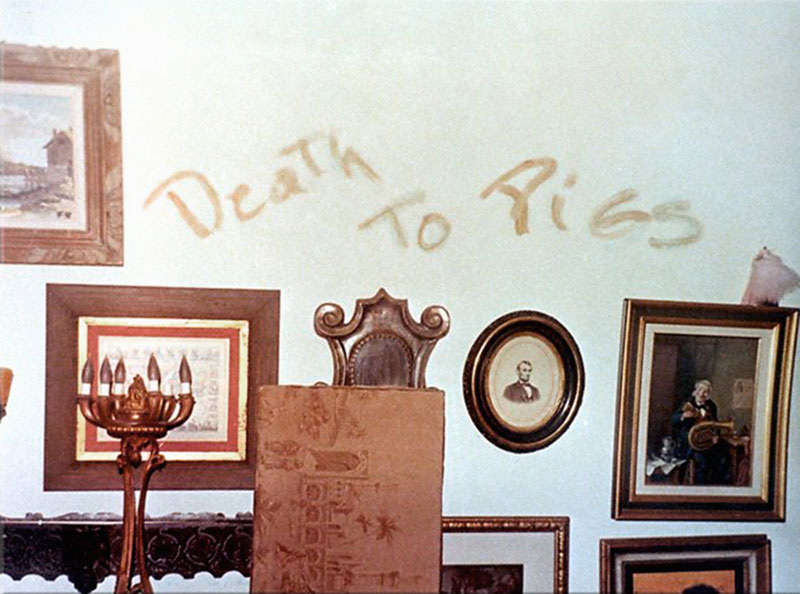
That night, Sharon Tate and her friends were killed, and Susan Atkins scrawled the word "Pig" in blood on the front door of the Cielo house, just as she'd done on the wall at Hinman's. Guenther believed this was the "sign" Beausoleil referred to [...]
[...]
So many veterans of this case, I noticed, were willing to say that the prosecutor had basically fabricated a motive, using Manson's ramblings to button up his case. Helter Skelter was "not a motive," [Paul] Whiteley said, "but a philosophy." Bugliosi was well aware of this; he just didn't care.
[...]
Guillory's thesis was this: Manson had gotten away with far too much at the Spahn Ranch in the months before the murders. Even though he was a federal parolee, Manson had no job; he had ready access to drugs, alcohol, and underage girls; he had a cache of firearms. And LASO officers knew all about it. At LASO's Malibu station--Spahn was in its jurisdiction--Manson's lawlessness was something of an open secret, Guillory said. Firemen patrolling the ranch's fire trails had even encountered Manson and the Family toting machine guns. And yet Manson never paid a price. The cops always looked the other way. According to Guillory, that was because his station had a policy handed down from on high: "Make no arrests, take no police action toward Manson or his followers."
[...] There was even an occasion where Manson was picked up by LASO police for statutory rape, but they ended up cutting him loose.
12bytes: Apparently that happened twice.
Even as the station instituted this hands-off policy, they kept a close watch over Manson. Guillory was sure that LASO's intelligence unit, or some other intelligence unit, was running surveillance on the Spahn Ranch. He alluded to memos about Manson--with cover sheets to protect against prying eyes--that went straight to the station captain, and who knows where after that. [...]
Then came the murder of Gary Hinman, and soon after it the Tate-LaBianca murders. How had LASO failed to see this coming? They'd been monitoring Manson constantly. Guillory theorized that the massive August 16 raid on the Spahn Ranch was LASO's effort to cover its tracks after the murders. Calling it "the biggest circus I've ever been involved in," he marveled at the fact that all the charges had been dropped seventy-two hours later.
[...]
"We were told not to bother these people," [Guillory] told me, referring to the Family. The order came in a memo from his captain.
[...]
The shock of the Tate-LaBianca murders, Guillory thought, forced the sheriff's office to hide its own intelligence-gathering efforts. If Manson were guilty of homicide, "How could anybody possibly say we let him on the streets?" There would've been civil liability issues. Careers would have been destroyed. And, of course, it would've cost Pitchess the next election.
But that didn't explain why the police allowed Manson to go free for another three months after the Tate murders, knowing he could have killed more people.
12bytes: In a December 1971 radio episode of Dialog: Assassination, Mae 'I see Nazi's' Brussell talks with former L.A. Sheriff's Deputy, Preston Guillory, who was present during the raid (i gave Mae the nickname because, being Jewish, she can't seem to get through an episode without implicating her favorite villain, 'the Nazi's', in virtually every conspiracy she landed upon, including the assassination of JFK. The incessant demonetization of Hitler and the Nazi's is a trait shared by disinformation artist extraordinaire, Alex 'Bullhorn' Jones).
Mae Brussell: Preston Guillory, Arresting Officer of Charles Manson (11-17-1971)
Mae's guest is Preston Guillory, one of the arresting officers of Charles Manson.
Preston Guillory, who had been a deputy with the Los Angeles Sheriff's Department when they eventually busted the Manson ranch. He stated that before the murders, they had been told to leave Charlie alone-despite complaints about his violations of parole (including, ironically, statutory rape) -because "something big was coming down."
[...]
In one of my earliest visits, with great relief, I found a copy of the search warrant for the August 16 raid. Although other researchers have since uncovered it, at that time it had never been seen by anyone outside law enforcement. Once I read it, I could understand why: it revealed that LASO had a far broader understanding of Manson's criminal activities--and his gurulike control over his followers--than had ever been shared with the public.
[...]
Manson had flouted the law and bragged about it to LAPD officers as he had his followers train rifles on them--something else, incidentally, not reported in Helter Skelter.
Manson's cavalier, taunting behavior continued. Elsewhere in the warrant, the LAPD's Ted Leigh said he had found three loaded ammunition clips for a carbine that "fell from a dune buggy while on the highway" sometime on or around July 29. Leigh soon heard from Manson himself, who said the ammunition was his and that he would stop by and pick it up.
[...]
Bugliosi, you may recall, had chalked up the failure to a simple mistake--the search warrant was "misdated." But now that I had it in my hands, I saw no evidence of any misdating. The warrant was clearly dated August 13, 1969. According to the California penal code, a warrant is good for ten days after its date. The raid was completely legal on August 16, a fact I verified with many police and attorneys.
[...]
On August 24, the owner of a property adjacent to the Spahn Ranch alerted LASO sheriffs that someone was trespassing. Deputies drove out to find Manson and a seventeen-year-old girl, Stephanie Schram, in an abandoned cabin, where they'd just had sex. On a bedside table were several joints. And the LASO brought in Manson once more, this time on a felony pot possession charge and for contributing to the delinquency of a minor.
[...]
[...] and on August 26 the sheriffs released Manson anyway, instead charging Schram with felony possession, even though she was a minor with no criminal record.
Chapter 6: Who Was Reeve Whitson?
At seven in the morning on August 9, 1969, [Shahrokh Hatami, Sharon Tate's friend and personal photographer] got a frantic phone call from a friend. Rubbing sleep from his eyes, he listened as the caller delivered the terrible news: Sharon Tate and four others had been murdered in her home on Cielo Drive. [...] As Hatami later learned, that call came ninety minutes before the Polanskis' maid had arrived at the house, discovered the bodies, and ran screaming to the neighbors, who called the police. Unwittingly, Hatami had become one of the first people in the world to hear about the murders--all because of his friend.
That "friend" was Reeve Whitson, whom Hatami characterized as "a mystery man"--a phrase I'd hear a lot as I researched him in earnest.
[...]
Hatami gave me the names of people who might've known him. Almost invariably they told me the same thing: that Whitson had been an undercover agent of some kind. Some said he was in the FBI, others the Secret Service. The rough consensus, though, was that he was part of the CIA, or an offshoot special-operations group connected to it.
[...]
Rita Edlund, who met Whitson through Rosenfelt, described a "very cryptic" figure who took pains to avoid detection. "I knew he helped in the Manson investigation," Richard, a special-effects cinematographer, said. "Reeve was among those, if not the one, who broke the Tate case." But, like the others I'd spoken to, Richard couldn't offer too many specifics, only beguiling memories: "He operated in the CIA--I believe he was on their payroll... Reeve was the kind of guy who, because of his background, he still would turn the inside light of his car out, so when he opened his door the light wouldn't go on. Because he had it that you never know who's looking." He "used his thumbnail to tear the top-right-hand corner of every piece of paper he handled, to mark it.
[...]
According to [Neil Cummings, a lawyer who'd known Whitson], Whitson was in a top-secret arm of the CIA, even more secretive than most of the agency. He talked a lot about his training in killing people, implying that he'd done it at least a few times. And when it came to Manson, he "was closer to it than anybody," Cummings avowed:
"He was actively involved with some sort of investigation when it happened. He worked closely with a law enforcement person and talked quite a bit about events leading up to the murders, but I don't remember what they were. He had regrets for not stopping them, for doing something about it.
"He had a reason to believe something weird was about to happen at the [Tate] house. He might have been there when it happened, right before or after--the regret was maybe that he wasn't there when it happened. He told me he was there after the murders, but before the police got there. He said there were screw-ups before and after. I believe he said he knew who did it, and it took him a long time to lead police to who did it."
[...]
I was flummoxed. For a year, I'd been hearing a rumor from people inside and outside the case: that Manson had visited the Cielo house after the murders, that he'd gone back with someone unknown to rearrange the scene. This would've accounted for discrepancies in the positions of the bodies: the killers left them one way, and the police found them in another. [...] Those in the area, including a private security officer, had heard gunshots and arguing hours after the killers said they'd left. And Manson himself had claimed on a few occasions that he'd gone back to the house with an unnamed individual to "see what my children did."
12bytes: If the scene was altered after the killers had left, then there should be contradictions between the testimony of the killers and that of the investigators. I had a look at the trial transcripts, available on the CieloDrive.com website, however they are not easily searchable due to their poor quality. Nevertheless, there seems to be evidence that multiple people were in the house after the murders. O'Neill provides a bit more information and details regarding the source for the above information in the 'Notes' section of his book: "First Homicide Investigation Progress Report, 19-21. Bugliosi described two incidents of sounds heard after the killers were supposed to have left the property in his book but omitted two more reports of shouting and gunfire that occurred hours after the murders--one from a second private security officer on patrol in the vicinity; see Vincent Bugliosi with Curt Gentry, Helter Skelter (New York: Norton, 1994), 20-21."
[...]
"He was working for the CIA," [Ellen Josefson, Reeve Whitson's ex-wife] said. "That is why I am worried to talk to you."
Was she sure about that?
"Yes, I am sure." She and Reeve had met in Sweden in '61, she explained. [...] Before the end of the year they'd married and moved to New York. In those days he was undercover as a journalist, producing pro-Communist pieces as a ploy to meet radicals.
[...]
"I [Reeve Whitson's daughter] could never understand how he got to know all these important people," she told me. "He told me that he worked within the Central Intelligence Agency. And he was in a part of the agency that was absolutely nonexistent. He did not exist."
[...]
The CIA wasn't even supposed to operate on domestic soil. What could they have been doing messing around with an acid-soaked cult in Los Angeles?
[...]
Usually, in the same breath, Whitson's friends named another military bigwig: General Curtis LeMay.
Chapter 7: Neutralizing the Left
I focused on two secret intelligence operations that were under way in Los Angeles in 1969: the FBI's COINTELPRO and the CIA's CHAOS. Their primary objective, according to three congressional committees that investigated them in the midseventies, was to discredit the left-wing movement by any means necessary--an aim that, coincidentally or not, described exactly the effect of the Manson murders.
[...]
In his '67 memo, Hoover formed a new branch of the [COINTELPRO] operation, aiming
"to expose, disrupt, misdirect, discredit, or otherwise neutralize the activities of black nationalist, hate-type organizations... The activities of all such groups of intelligence interest to this Bureau must be followed on a continuous basis... Efforts of various groups to consolidate their forces or to recruit new or youthful adherents must be frustrated. No opportunity should be missed to exploit... the organizational and personal conflicts of the leaderships of the groups... [and] to capitalize upon existing conflicts between competing black nationalist organizations."
[...]
In the Black Panther party and, in Los Angeles, the US Organization, informants were instrumental in fomenting violence. They would spread disinformation to catalyze an intergroup rivalry, or they'd simply arrange for the bloodshed themselves.
[...]
COINTELPRO promised the violent repudiation of what Hoover had dubbed a "hate-type organization." The Bureau's strategy was merciless, its results disastrous but effective. In Chicago, famously, the FBI recruited William O'Neal, recently charged with impersonating a federal officer and driving a stolen car across state lines, to infiltrate the Panthers' Illinois chapter, forgiving those charges in exchange for his services. [...] O'Neal's post allowed him to provide the Bureau with a steady stream of intelligence, including detailed floor plans of [Fred] Hampton's apartment. Although he found no evidence that Hampton or the group posed a threat to anyone's safety, O'Neal continued to inform. In December 1969--days, coincidentally, after Manson was charged in the Tate-LaBianca murders--O'Neal slipped a barbiturate into Hampton's drink over dinner. By the end of the night, the police had raided Hampton's apartment and shot him twice in the head at point-blank range.
[...]
One of [COINTELPRO's] greatest coups came in January 1969, when G-men had incited the murders of two Black Panthers on the UCLA campus. [...]
LASO knew that the Panthers were murdered because of the FBI's meddling. They didn't care. In fact, they hid the FBI's role in the violence.
[...]
The FBI would make it seem as if even sympathetic leftists were in the Panthers' crosshairs. Less than a year after this memo was written, Manson's followers lined up four denizens of liberal Hollywood in Roman Polanski's home and cut them to pieces, leaving slogans in blood to implicate the Black Panthers.
Of course, the FBI couldn't have done this work alone. They needed local law enforcement on their side, and, according to the Church Committee, they got it.
The committee looked into one of the most notorious COINTELPRO actions in L.A., the framing of Gerard "Geronimo" Pratt, a Black Panther and a decorated Vietnam vet. Pratt would be imprisoned for twenty-seven years for a murder the FBI knew he didn't commit. [...] Even before the frame-up, FBI gunmen had attempted to kill Pratt by shooting at him through the window of his apartment; [...]
[...]
In August 1967, the same month Hoover launched COINTELPRO, CIA director Richard Helms inaugurated the agency's aforementioned illegal domestic surveillance program, CHAOS, which also employed agents and informants to infiltrate "subversive" groups and then "neutralize" them.
[...]
The most promising but frustrating of my inquiries concerned an LAPD officer named William W. Herrmann. [...] Herrmann's story hints at how intelligence agencies may have collaborated with police in Los Angeles.
[...]
But Herrmann's work wasn't limited to Los Angeles, or even to the United States. My FOIA request to the FBI yielded a collection of redacted documents detailing his extensive employment history. Concurrent with his time in the LAPD, he'd worked under contract for a dizzying list of American intelligence and military agencies: the air force, the Secret Service, the Treasury Department, the President's Office of Science and Technology, the Institute for Defense Analysis, the Defense Industrial Security Clearance Office, and the Defense Department's Advanced Research Projects Agency. Most of his work for these groups remains classified.
12bytes: O'Neill details the source for the above information in the 'Notes' section of his book: "Eighty-three pages were released by the Washington, D.C., office of the FBI (FOIPA no. 0966502); a second request to the Los Angeles Field Office produced an additional thirty-eight pages (FOIPA no. 190-231795). Many of the redactions are preceded or followed by phrases like "project which was very sensitive in nature" or "Top Secret (The D.O.D. [Department of Defense] Clearances are still active)." One report revealed that Herrmann's work for the White House Office of Science and Technology (at unspecified dates in the 1960s) was "so sensitive in nature" that the White House "was unable to provide any further information"--and the information that was provided to the FBI was then redacted by the agency."
[...]
The dates of Herrmann's stint in Vietnam, his job description, his professional affiliations, and his training made it abundantly likely that he was working for a CIA project called Phoenix, one of the most controversial elements in the agency's history.
Richard Nixon had secretly authorized Phoenix in 1968; it was discontinued in early '71. The agency described it as "a set of programs that sought to attack and destroy the political infrastructure of the Viet Cong." Inside Vietnam, Phoenix operatives waged a campaign of terror against the Viet Cong guerrillas, with tactics including the assassination and torture of noncombatant civilians.
[...]
A Special Forces soldier, Anthony Herbert, the single most decorated combat veteran of Vietnam, published a bestselling book, Soldier, that detailed typical orders from his Phoenix superiors: "They wanted me to take charge of execution teams that wiped out entire families and tried to make it appear as though the Viet Cong had done it themselves.
[...]
Their attempts were sometimes even more unhinged. In 1968, CIA scientists at the Bien Hoa Prison outside Saigon surgically opened the skulls of three prisoners, implanted electrodes on their brains, gave them daggers, and left them alone in a room. They wanted to shock the prisoners into killing one another. When the effort failed, the prisoners were shot and their bodies burned.
[...]
The whole operation relied on computerized indexes. The identity of its CIA leader never came to light--but whoever he was, he was there ostensibly as part of the Agency for International Development (AID), later revealed as a CIA front.
Herrmann, of course, was known for his aptitude with computers, and his time in Vietnam coincided almost exactly with Phoenix's operations. The papers I found at the National Archives confirmed that he was a part of AID.
[...]
Like Governor Reagan and President Johnson, Herrmann believed that California's student dissidents were funded by foreign Communists. He told the Observer that he had a "secret plan" for "forestalling revolution in America." The key was "to split off those bent on destroying the system from the mass of dissenters; then following classic guerilla warfare 'theory' to find means which will win their hearts and minds." He called this plan, simply, "Saving America," and it included strategies for "deeper penetration by undercover agents into dissenting groups," such as "army agents pos[ing] as students and news reporters."
Chapter 8: The Lawyer Swap
In the comfort of Caballero's office, Atkins spoke on tape for two and a half hours about her role in the murders. Listening the next day, Bugliosi noticed that she'd changed her story. At first, she'd told her cellmates that she'd stabbed Sharon Tate. Now she claimed that she couldn't bring herself to do it, and instead held Tate by the arms while Watson stabbed her. That's what she told the grand jury, too: that she didn't kill Sharon Tate. But the discrepancy wasn't a problem for Bugliosi as long as he got his indictments.
12bytes: Susan Atkins is a particularly interesting case. Accused of killing the pregnant Sharon Tate, she later recanted, stating that she lied about stabbing Sharon in order to protect Watson and Manson, as well as to present a tough persona. Whatever the case, Atkins 'got religion' and seems to have transformed into a model prisoner who pursued further education and programs designed to help fellow prisoners. Sure, one could argue her pursuits were a ploy to fool the parole board (several of the cult members became religious), however she was diagnosed with terminal brain cancer in 2008 and, at the age of 60, after having spent 39 years in prison and having her left leg amputated, still her release was denied. Is that justice, or is that revenge? Susan died in 2009. From Wikipedia:
On June 1, 2005, Atkins had her 17th parole hearing; this resulted in a three-year denial. She was given less than six months to live and subsequently requested a "compassionate release" from prison. Atkins' attorney, Eric P. Lampel, stated that Atkins' condition had deteriorated to the point that she was paralyzed on one side, could only talk "a little bit", and could not sit up in bed without assistance. The hearing was attended by various family members of the victims, including Debra Tate and members of the Sebring family, and they requested that her parole be denied. She received a four-year denial.
Chapter 9: Manson's Get-Out-of-Jail-Free Card
The events of June 4, 1969--about two months before the Tate-LaBianca murders--are as good a starting point as any. At 3:30 that morning, an LAPD patrolman pulled over a '68 Plymouth for speeding in the San Fernando Valley, ordering the driver to step out of the car. A small, long-haired man emerged, staggering toward him, his arms flailing in "wild gyrations." "He appeared under the influence of some unknown intoxicant," the officer later reported.
It was Charles Manson. He was arrested and charged with driving under the influence, being on drugs, and operating a vehicle without a license. He had four passengers in the car, all arrested for being under the influence: Thomas J. Walleman, Nancy Pitman, Leslie Van Houten, and Susan Atkins. Within twenty-four hours, all of them--including Manson, who'd informed the booking officers that he was on federal parole--were released with no charges. All except Atkins. She was held for more than two weeks.
[...]
Describing Atkins's whereabouts as "totally unknown," the probation office's report advised, "The best thing is to revoke the defendant's probation as it appears she has no intentions of abiding by it."
Despite that recommendation, at a hearing that month, Judge Wayne Burke of Mendocino County Superior Court decided that "the defendant has not violated probation. [...] And off she went, soon to participate in the murders of at least eight people.
[...]
Then, on January 4, 1968, Judge Jones signed an order terminating Susan Atkins's probation. Probation officials in two states had gone so far as to warn Atkins that her return to prison was inevitable. Instead, the judge rewarded her by releasing her from all obligations to law enforcement.
As in the later case, there was no record explaining the judge's decision. He knew the nature of her crimes; he knew how serious a threat she could become. Why would he have reversed himself? [...] Only one thing had changed when these reversals occurred: she was with Manson.
[...]
Soon all five women had been charged with felony drug possession and contributing to the delinquency of minors. They were locked up in the Mendocino County jail.
[...]
The man they called was Roger Smith, Manson's parole officer in San Francisco. Or rather, his former parole officer.
[...]
By the end of '67, he'd winnowed his set of parolees from forty down to just one: Manson.
[...]
If Manson was eager to portray himself as Jesus, then Roger Smith would've been John. According to one of my sources, no one knew Manson better than his parole officer did. It would be surprising if Smith didn't know that his ward was breaking the law--a lot. But he had only praise for his sole client. "Mr. Manson has made excellent progress," he wrote in one of several reports he made to the head parole office in Washington, D.C. "He appears to be in better shape personally than he has been in a long time."
Smith wrote those words on July 31, 1967. At the time, Manson was sitting in a jail cell. A few days earlier, in Ukiah, he'd been convicted of interfering with a police officer in the line of duty--a felony.
[...]
Manson's complete parole file has never been released. It wasn't even permitted into evidence during the trial. During the death-penalty phase, the defense's Irving Kanarek had subpoenaed the file, hoping he could use some part of it to argue for his client's life. Not only did the United States Attorney General, John Mitchell, refuse to release it, he dispatched David Anderson, an official from the Justice Department, to aid Bugliosi in his effort to quash the subpoena. It was an almost unprecedented action.
[...]
Under Smith's supervision, Manson was repeatedly arrested and even convicted without ever being sent back to prison. It was up to Smith to revoke Manson's parole --it was ultimately his decision. But he never even reported any of his client's violations to his supervisors.
In interviews with me, Smith claimed not to have known about Manson's conviction in Ukiah, even though it had occurred under his watch. In fact, in the same July 1967 letter that should have mentioned Manson's conviction--the letter that lauded his "excellent progress"--Smith requested permission for Manson to travel to Mexico, where he would've been totally unsupervised, for a gig with a hotel band. [...]
"Manson is not to leave the Northern District of California," the parole board responded, noting that [...] his record was "lengthy and serious."
[...]
[...] After those two Mexico requests, Smith generated only two more documents regarding Manson for another five months. Both were simple form letters authorizing Manson to travel to Florida to meet with "recording agents."
Those interested me for several reasons. First, they violated Smith's orders from Washington--he was to forbid Manson from leaving the Northern District of California under any circumstances. Second, Smith had postdated them, suggesting that he wrote them after Manson had already left town, safeguarding him from another potential violation. And third, there's no sign that Manson and the Family ever actually went to Florida. If they went anywhere, the only available evidence suggests, it was to Mexico.
[...]
But in Helter Skelter's more than seven hundred pages, Bugliosi could spare only twenty-one words for Roger Smith, whom he never called to testify at trial. Smith told me that he was never questioned about Manson by Bugliosi, the police, or any federal agency--ever.
[...]
Manson built the Family right under his federal supervisors' noses. From then on, the federal government, as well as local and state law enforcement, only backed further away from the group as they more brazenly broke the law.
The only one who didn't was Roger Smith. Well after his supervision of Manson ended, he was still writing letters to the Mendocino County court about Atkins's and Brunner's sterling characters, and he was caring for Manson's son.
[...]
Smith may have had ulterior motives when he told Manson to move to Haight-Ashbury. As part of his criminology research, he'd been tapped to lead a study on amphetamines and their role in the violent behavior of Haight-Ashbury hippies. The National Institute of Mental Health funded this study, as they had the San Francisco Project. In 1976, a FOIA request forced NIMH to acknowledge that it had allowed itself to be used by the CIA as a funding front in the sixties.
Smith hoped to learn why some people, but not others, became psychotically violent on amphetamines--and to see if this violence could be controlled. The goals of the Amphetamine Research Project (ARP), as he dubbed it, were to "illuminate three major areas" of the "speed scene" in the Haight: the "individual" experience, the "collective or group experience," and the "way in which violence is generated within the speed marketplace."
[...]
To ensure success, Smith argued, researchers had to protect their subjects from criminal prosecution, concealing their activities from the police and granting them anonymity in all reports. [...]
Smith ran the ARP out of the Haight-Ashbury Free Medical Clinic (HAFMC), which had just opened the previous summer. Soon, he was spending so much time there that he made a proposition to his only parole client: instead of meeting with Manson in downtown San Francisco, where Smith had an office, why not just meet at the clinic? It was more convenient for both of them, and anyway, by that time Manson and "his girls" had started to contract sexually transmitted diseases; the clinic could treat those for free.
Chapter 10: The Haight-Ashbury Free Medical Clinic
When it opened at 558 Clayton Street in June 1967, the Haight-Ashbury Free Medical Clinic (HAFMC) was an immediate sensation. [...] The clinic did everything it could to advertise its psychedelic affinities. Exam rooms were painted in aqua and Day-Glo orange; one of them was wallpapered with a vibrant collage of peace signs, naked bodies, and hypnotic swirls.
12bytes: This reminds me of the psychedelic schemes which adorned some of the buildings at the Montauk Air Force Station at Long Island, New York, where it is said that, among other nefarious activities, MKULTRA activities had taken place.
[...]
The reams of record keeping you'd expect from clinical experimentation simply weren't there. Stephen Pittel, a forensic psychologist who'd worked with both Smiths at the HAFMC, volunteered a stunning bit of information that Roger and David had neglected to share with me.
"The only thing I remember about ARP was that it got burglarized one night and Roger lost all of his files," Pittel told me.
[...]
The HAFMC's original chief psychiatrist, Dr. Ernest Dernburg, remembered the theft of the ARP files, too. As he recalled, they'd gone missing right after the announcement of Manson's arrest for the Tate-LaBianca murders and that "Roger, understandably, was pretty upset." Nothing else was taken from the HAFMC, which led the staff to believe that the police or some federal agency might've removed the files.
[...]
It was Roger Smith who'd had the better diagnosis, and the earlier one, David maintained: "Roger said that he knew from day one that Charlie was a psychopath."
But Roger apparently never thought it was necessary to intervene [...] Instead, he sent him to the Haight and watched him drop acid every day, accruing suggestible young followers as he went. Meanwhile, David was studying the exact psychological conditions that gave rise to the Manson Family while he treated them at his clinic. Bugliosi had erased all of these facts from his history of the group.
Chapter 11: Mind Control
Through my research on the HAFMC, I'd learned that yet another shadowy researcher kept an office there--and that his LSD research had clearer, more nefarious ties to the CIA than any of the others. At least his name wasn't Smith this time: he was Dr. Louis Jolyon West.
[...]
He'd used drugs and hypnosis to conduct behavior-control experiments on Americans without their knowledge or consent.
[...]
Getting his bearings at the HAFMC, he arranged for the use of a crumbling Victorian house on nearby Frederick Street, where he opened what he described as a "laboratory" disguised as a "hippie crash pad."
[...]
According to records in West's files, his "crash pad" was funded by the Foundations Fund for Research in Psychiatry, Inc., which had bankrolled a number of his other projects, too, across decades and institutions. For reasons soon to be clear, I concluded that the Foundations Fund was a front for the CIA.
[...]
Before he moved to the Haight, he'd supervised a similar study in Oklahoma City, hiring informants to infiltrate teenage gangs and engender "a fundamental change" in "basic moral, religious or political matters." [...] its funds came from Sidney J. Gottlieb, the head of the CIA's MKULTRA program.
[...]
Full-fledged U.S. research into LSD began soon after the end of World War II, when American intelligence learned that the USSR was developing a program to influence human behavior through drugs and hypnosis. The United States believed that the Soviets could extract information from people without their knowledge, program them to make false confessions, and perhaps persuade them to kill on command.
The CIA, then in its infancy, saw mind control as a natural extension of communism, [...] In 1949 it launched Operation Bluebird, a mind-control program whose chipper name belied its brutal ambitions and its propensity for trampling on human rights. In its yen to best the Soviets, the CIA tested drugs on American citizens--most in federal penitentiaries or on military bases--who didn't even know about, let alone consent to, the battery of procedures they underwent.
[...]
Dr. Sidney Gottlieb, a poisons expert who headed the chemical division of the CIA's Technical Services Staff, had convinced the agency's director, Allen Dulles, that mind-control ops were the future. [...] Mind control became Gottlieb's pet project. Dulles, convinced that the American dream was at stake, ensured that Gottlieb was well funded. In a speech at Princeton University, Dulles warned that Communist spies could turn the American mind into "a phonograph playing a disc put on its spindle by an outside genius over which it has no control." Just days after those remarks, on April 13, 1953, he officially set Project MKULTRA into motion.
The project's broadest goal was "to influence human behavior." Under its umbrella were 149 subprojects, many involving research that used unwitting participants. Having persuaded an Indianapolis pharmaceutical company to replicate the Swiss formula for LSD, the CIA had a limitless domestic supply of its favorite new drug. The agency hoped to produce couriers who could embed hidden messages in their brains, to implant false memories and remove true ones in people without their awareness, to convert groups to opposing ideologies, and more. The loftiest objective was the creation of hypno-programmed assassins.
[...]
The Senate demanded the formation of a federal program to locate the victims of MKULTRA experiments, and to pursue criminal charges against the perpetrators. That program never coalesced. Surviving records named eighty institutions, including forty-four universities and colleges, and 185 researchers, among them Louis J. West.
[...]
In a paper titled "The Psychophysiological Studies of Hypnosis and Suggestibility," [Louis West] claimed to have achieved the impossible: he knew how to replace "true memories" with "false ones" in human beings without their knowledge.
[...]
[...] I accepted that Charles Manson had altered his followers' minds, and that LSD did a lot of the heavy lifting. He'd seemed to have an endless supply of the drug, though no one said how he got it. Plus, he was so often described as "hypnotic." Ed Sanders had written in The Family of a hypnotist, William Deanyer, who managed a Sunset Strip club and alleged that he'd taught Manson how to hypnotize. [...] his daughter told me she'd seen her father teaching Manson at the club.
With Alan Scheflin, a forensic psychologist and law professor who'd written a book on MKULTRA, I laid out a circumstantial case linking West to Manson. Was it possible, I asked, that the Manson murders were an MKULTRA experiment gone wrong? "No," he said, "an MKULTRA experiment gone right."
[...]
As a self-styled brainwashing expert, [West had] been present whenever mind control reared its ugly head in American culture. Murders, assassinations, kidnappings, cults, prisoners of war--his fingerprints were on all of them.
[...]
After midnight on July 4, 1954, a three-year-old girl named Chere Jo Horton disappeared outside the Lackland Air Force Base, where Jolly West was stationed. [...]
Within an hour of Horton's disappearance, the [search] party came upon a car with her underwear hanging from the door. They heard shouting nearby. Two construction workers had been napping in a nearby gravel pit when a Lackland airman wandered out of the darkness. He was shirtless, covered in blood and scratches. Making no attempt to escape, he let the search party walk him to the edge of the highway. Bystanders described him as "dazed" and "trance-like."
"What's going on here?" he asked. He didn't seem drunk, but he couldn't say where he was, how he'd gotten there, or whose blood was all over him. Meanwhile, the search party found Horton's body in the gravel pit. Her neck was broken, her legs had been torn open, and she'd been raped. Deputies arrested the man.
His name was Jimmy Shaver. At twenty-nine, he was recently remarried, with two children, no criminal record, no history of violence.
[...]
Shaver's medical history was scrutinized at trial, but little mention was made of the base hospital, Wilford Hall, where West had conducted his MKULTRA experiments on unwitting patients. On the stand, West said he'd never gotten around to seeing whether Shaver had been treated there. I checked--Lackland officials told me there was no record of him in their master index of patients. But, curiously, all the records for patients in 1954 had been maintained, with one exception: the file for last names beginning with "Sa" through "St" had vanished.
[...] West had written that he planned to experiment on Lackland airmen for projects that "must eventually be put to test in practical trials in the field."
[...]
12bytes: In the following paragraph, O'Neill is referring to Jacob Rubinstein, aka Jack Ruby, the man who shot and killed Lee Oswald, the "lone assassin" responsible for killing John Kennedy according to the Warren Commission report, which is nothing more than a fairytale. If the account is true, then it would seem that Ruby's programming would had to have been triggered in some way, perhaps by an auditory or visual queue. Ruby's case is a fascinating one indeed. Dorothy Kilgallen, a popular columnist, journalist and TV game show panelist, interviewed Ruby and was preparing to break a story which she told others would blow the whole JFK assassination narrative wide open. Before she was able to disclose what she learned however, Kilgallen was found dead in her home under extremely suspicious circumstances. Mark Shaw, a former criminal defense attorney and researcher who has worked the Kilgallen case and wrote several books about it, claims that Ronald Pataky, who Shaw alleges may have been enrolled in the CIA's School of the Americas, was involved in Kilgallen's death, having spiked her drink. Kilgallen's files were removed from her townhouse, presumably by FBI agents. Details are available in a CovertAction Magazine article.
According to a first-person account that [Jack] Ruby produced with a ghostwriter--published in newspapers in a scenario close to Susan Atkins's, and again involving Lawrence Schiller--Ruby "lost [his] senses" when he pulled out his gun. Next thing he knew, the cops had him pinned to the floor, and he had no memory of what he'd just done. "What am I doing here?" he asked. "What are you guys jumping on me for?" A psychiatric analysis solicited by Ruby's defense attorneys said he'd suffered "a 'fugue state' with subsequent amnesia."
[...]
Meanwhile, at Langley, the CIA's Richard Helms was making the case that MKULTRA's human guinea pigs had to be entirely unaware of the experiments performed on them. [...]
Once Dr. Smith was driving Ruby's legal team, one of his first acts was to request a new psychiatric examination of Ruby. He had one candidate in mind: Dr. Louis Jolyon West, whom he noted in a court brief had enjoyed acclaim for his studies of brainwashed American POWs.
[...]
[...] West emerged from Ruby's cell to announce that the previously sane inmate had undergone "an acute psychotic break" sometime during the preceding "forty-eight hours." [...] West asserted that Ruby "was now positively insane." The condition appeared to be "unshakable" and "fixed."
[...]
12bytes: Regarding the following passages, the American people, by and large, believe that the official and final finding of the U.S. government's "investigation" of the John Kennedy assassination is that Oswald acted alone, which of course is false. The government never revealed some of the most damning evidence of the assassination conspiracy, nor will they ever, at least not in the foreseeable future.
[...] Feeling it had no choice but to start over again, the House voted overwhelmingly to impanel the House Select Committee on Assassinations (HSCA) and reinvestigate.
The HSCA openly aspired to make the Warren Report "persuasive." Its final five-volume report--arriving in 1979, after two and a half years and $5.4 million in taxpayer money--did just the opposite. Based on new ballistic evidence of a second gunman in Dallas, the HSCA rejected the Warren Commission's finding that Oswald had acted alone. There was a "probable conspiracy," it announced, to assassinate the president.
Chapter 12: Where Does It All Go?
On September 29, 1969, a twenty-three-year-old named Filippo Tenerelli left his parents' home in a brand-new Volkswagen Beetle. Tenerelli, a native Italian, had immigrated to Los Angeles with his family in 1959. He had no history of mental illness and no arrests.
[...]
On October 30, the Inyo Register reported that the "suicide victim" had been positively identified as Filippo Tenerelli of Culver City.
[...]
According to documents I found, investigators doubted that Tenerelli had died by his own hand; they had evidence linking Family members to his death.
[...]
The police reports contained no photographs of the crime scene. They made no mention of any forensics tests--no ballistics, blood splatters, fingerprints, rigor mortis. Officials I spoke to said these would have been routine in an unattended shooting death, even in 1969. There was a lab report showing that Tenerelli's blood-alcohol level at the time of his death was .03%, which doesn't even qualify as under the influence. But he'd bought those two fifths of whiskey the night before he died. When his body was found, one bottle was sitting empty in the wastebasket; the other was on a shelf, only a third full. If Tenerelli didn't drink all that whiskey, who did?
[...]
Robert Denton, the surgeon who'd conducted Tenerelli's autopsy, told me he'd never believed the case was a suicide; he only called it that under pressure from the coroner's office.
[...]
A report filed by one of the sheriff's deputies on October 5 said, "From indications at the scene... the vehicle has not been at the location for more than two days." If that was true, Tenerelli couldn't have dumped the car. His body had been found three days earlier, on October 2, and the estimated time of death was between 9:30 and 10:30 p.m., October 1.
[...]
Meanwhile, memos from the California Highway Patrol suggested suspects for the murder: the group of hippie car thieves they'd recently taken into custody. In Bishop, "around the 1st of October," a highway patrolman had stopped a "late model" blue Volkswagen; Tenerelli drove a '69 blue Volkswagen, and October 1 was the day before his body was found. The patrolman questioned the driver, who, like his two male passengers, was a "hippie" type. Later, investigators showed the patrolman a photograph of the Family, including Manson, Steven Grogan, and Danny DeCarlo. He "was sure" that DeCarlo was the driver of the car.
[...]
After the Manson Family was arrested for their auto-theft ring, one of the girls told investigators that she was "involved" with Tenerelli, and that he'd been with the Family in Death Valley before his death. But Cox couldn't remember who'd said that.
[...]
One last thing bothered me: the pubic hair. If, as police reports stated, Tenerelli had shaved his pubes just before killing himself, and a "few strands" had been found "between the pages" of a Playboy magazine--what happened to the rest? The Family's Bill Vance had a "magic vest" he liked to wear that was "made of pubic hair," per a report from the Los Angeles County Sheriff's Office.
Epilogue
For reasons I can't understand, district attorneys, law enforcement agencies, federal bureaus, and other outposts of officialdom continue to suppress their files, even as they claim they have nothing to hide.
[...]
As of this writing, the LAPD and the DA's office are still in legal battles about their unfathomable refusal to release information--a refusal that extends to the victims' families and to the defendants themselves.
The excerpts i included from O'Neill's book fall short of painting a full picture. Anyone interested in this history is highly encouraged to buy a copy of the book. It's a real page-turner. That said, i wasn't surprised the lest bit to find the fingerprints of the CIA throughout the Manson affair, but the complexity of their involvement and the lengths they will go to hide it is somewhat interesting. I'm looking forward to O'Neill's follow-up book.